
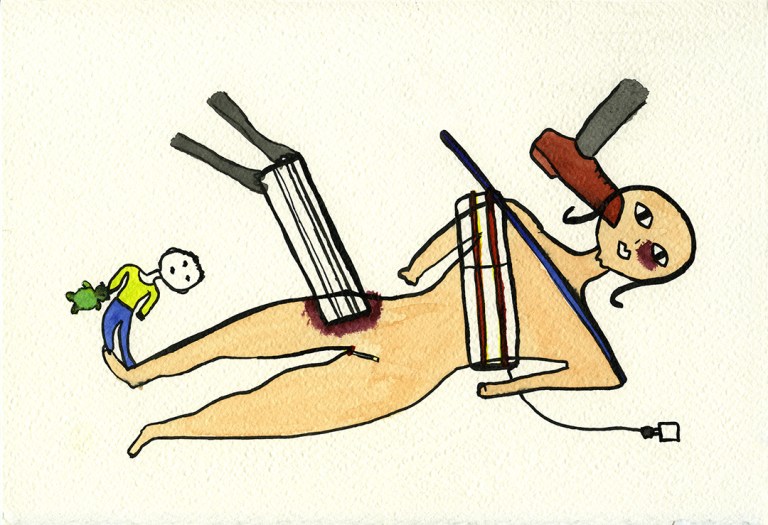
killed by her male partner November 18, 2012 at age 19
UXORICIDES. This book is the illustrated archive of the 132 women killed by their partners in Community of Madrid between 1999 and 2020 and is now published in Spanish. The book was presented in November 2024. Este libro es el archivo ilustrado de las 132 mujeres asesinadas por sus parejas o exparejas hombres en la Comunidad de Madrid entre 1999 y 2020. La acción violenta de estos hombres llega hasta el grado de causarles la muerte, pero muchos ya ejercían violencia de manera continuada. Los asesinatos son la parte más visible de la violencia de género.
https://fundacionmosis.com/tienda/Vidas.htm
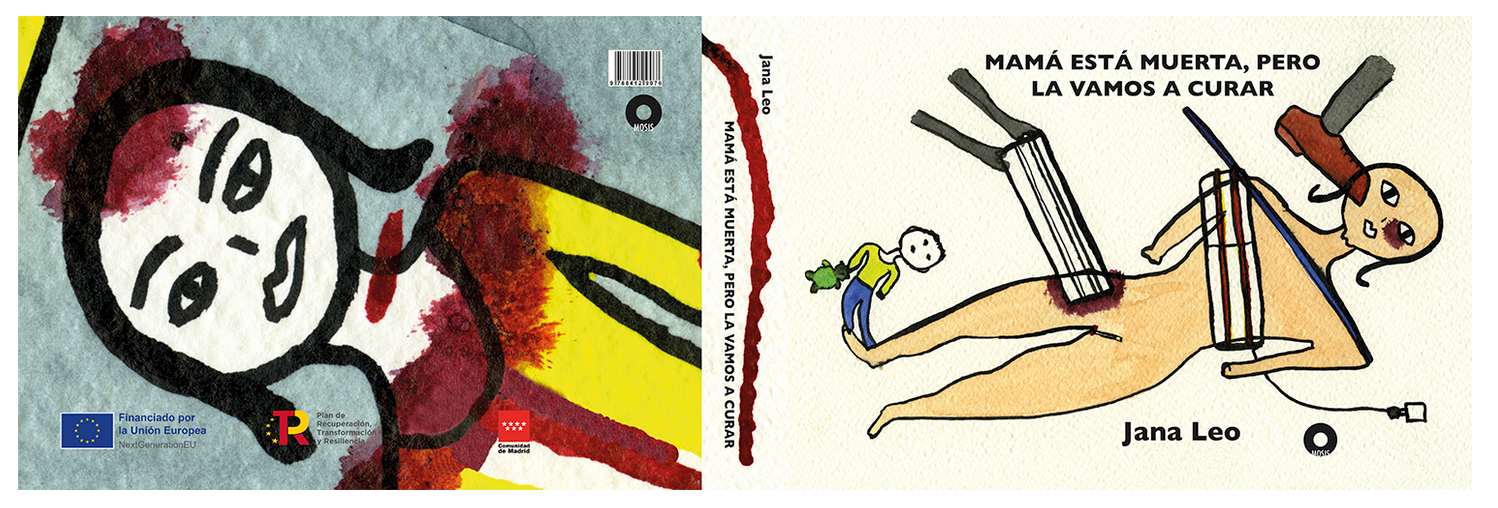
En varias ocasiones, he tenido la sensación de que tener pareja puede llegar a ser peligroso: el desprecio verbal, el abuso psicológico, el acoso, el maltrato y la muerte; una relación sentimental podría ser una amenaza porque puedo (porque puedes) perder la dignidad, la independencia y la vida. No sólo se necesitan programas de asistencia, sino otros de sensibilización para prevenir la agresión y que no haya heridas que curar.
On several occasions, I have had the feeling that having a partner can become dangerous: verbal contempt, psychological abuse, harassment, mistreatment and death; a sentimental relationship could be a threat because I can (because you can) lose dignity, independence and life. Not only assistance programs are needed, but also awareness programs to prevent aggression so that there are no wounds to heal.
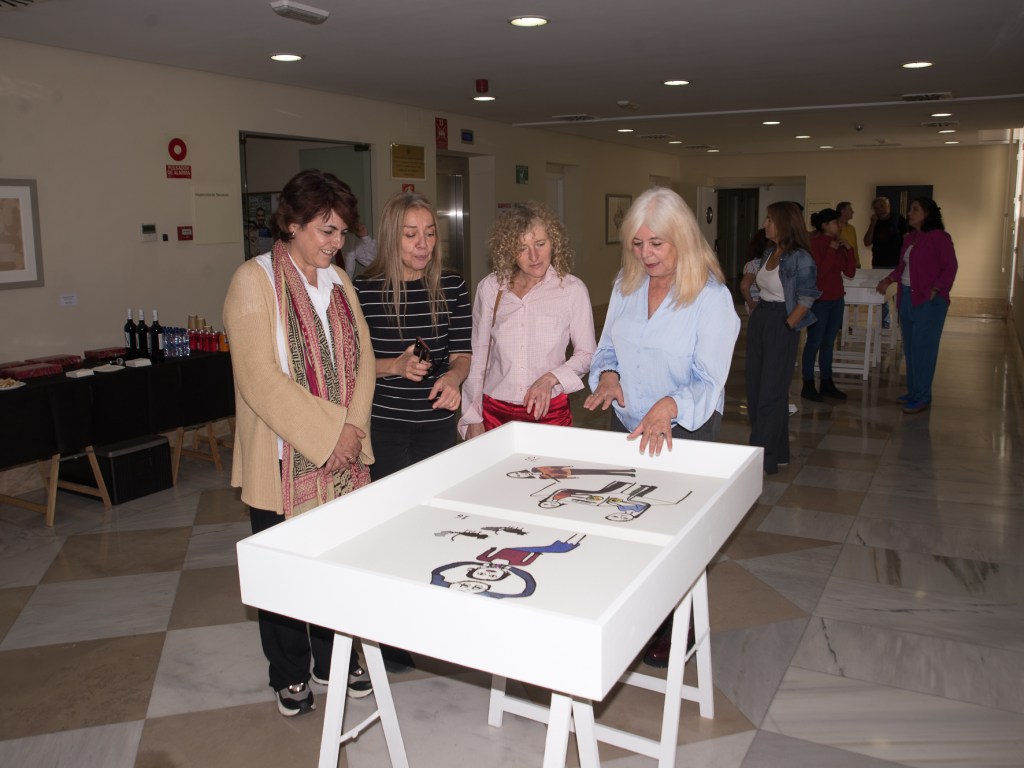
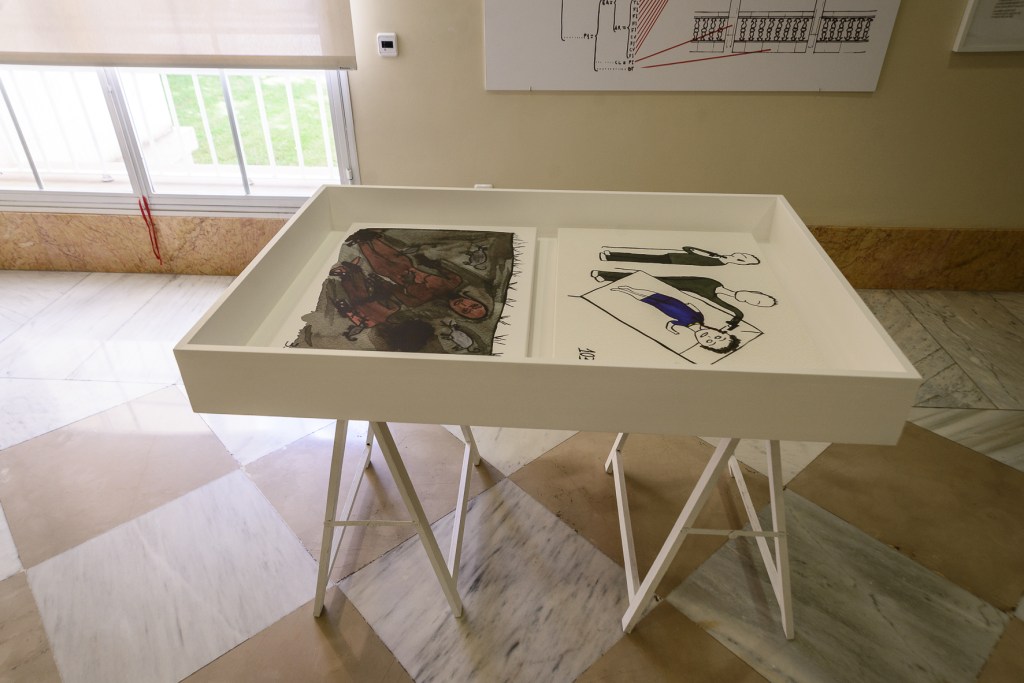
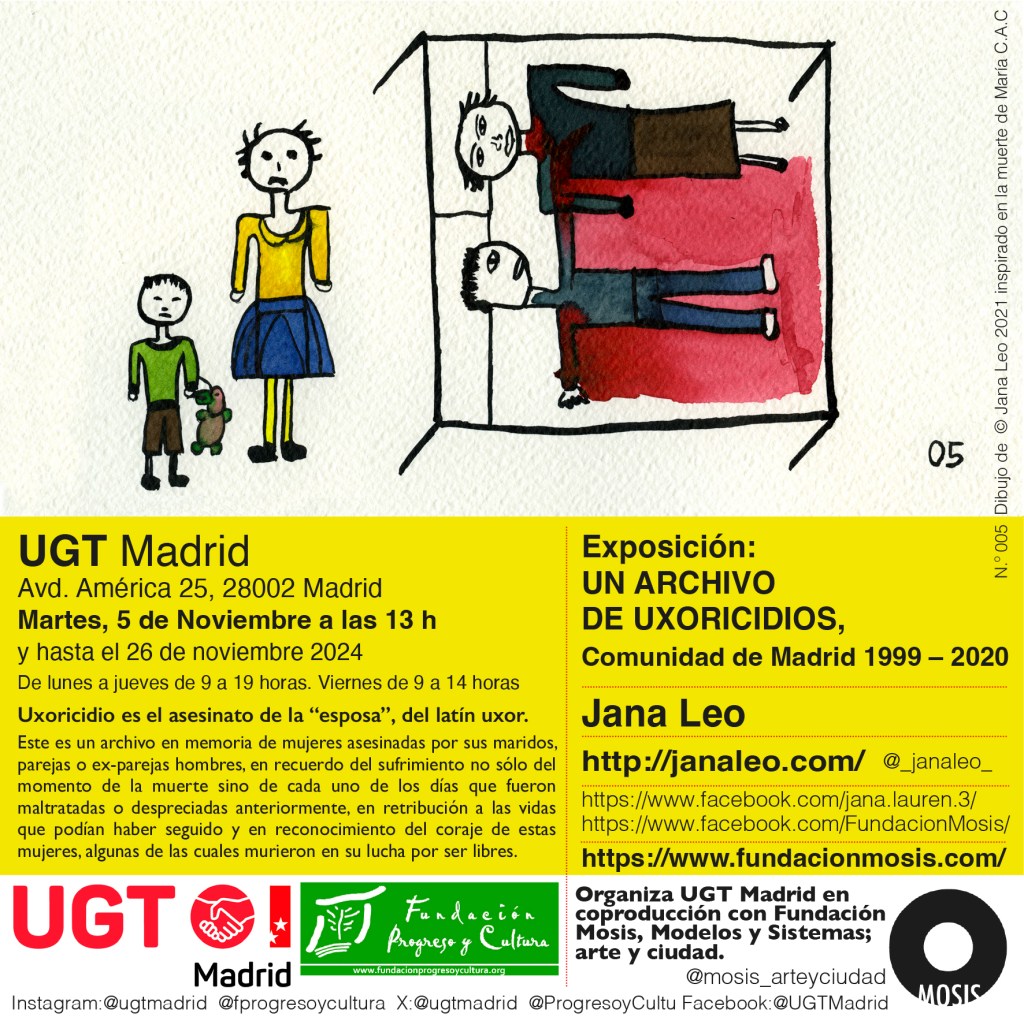
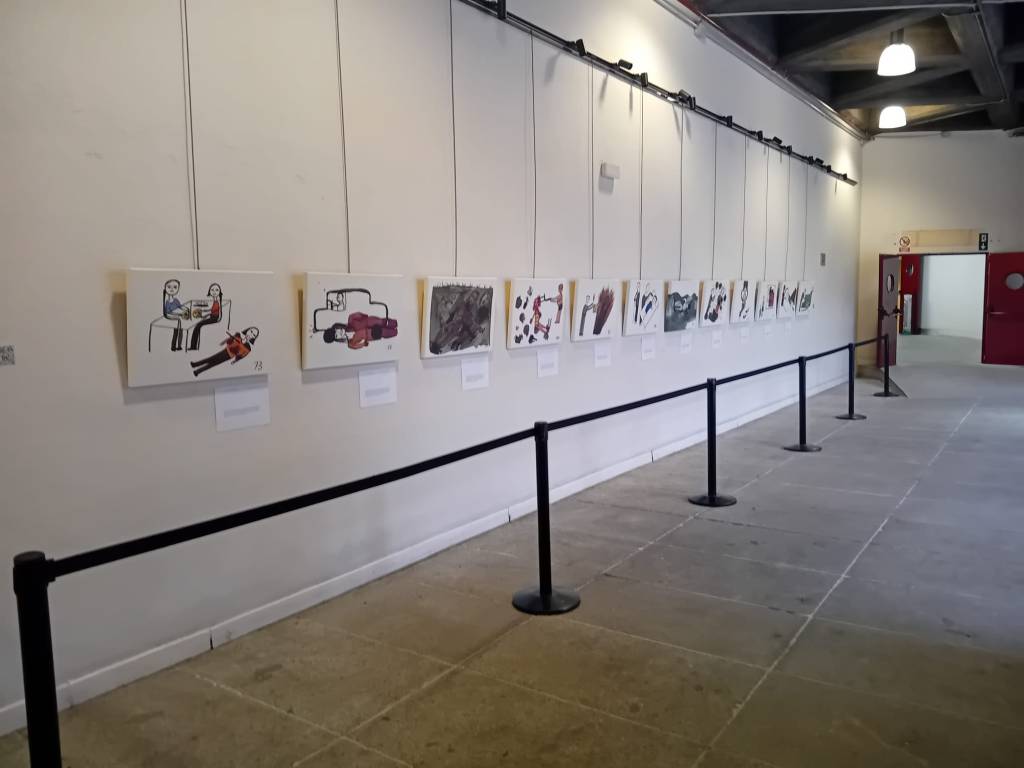
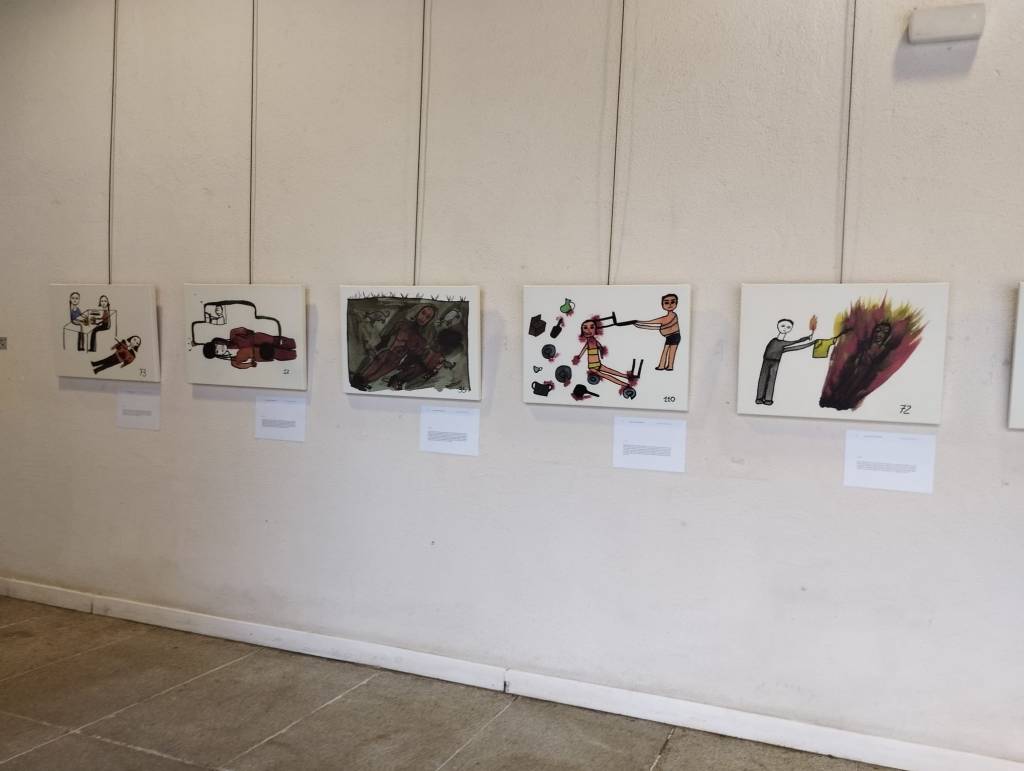
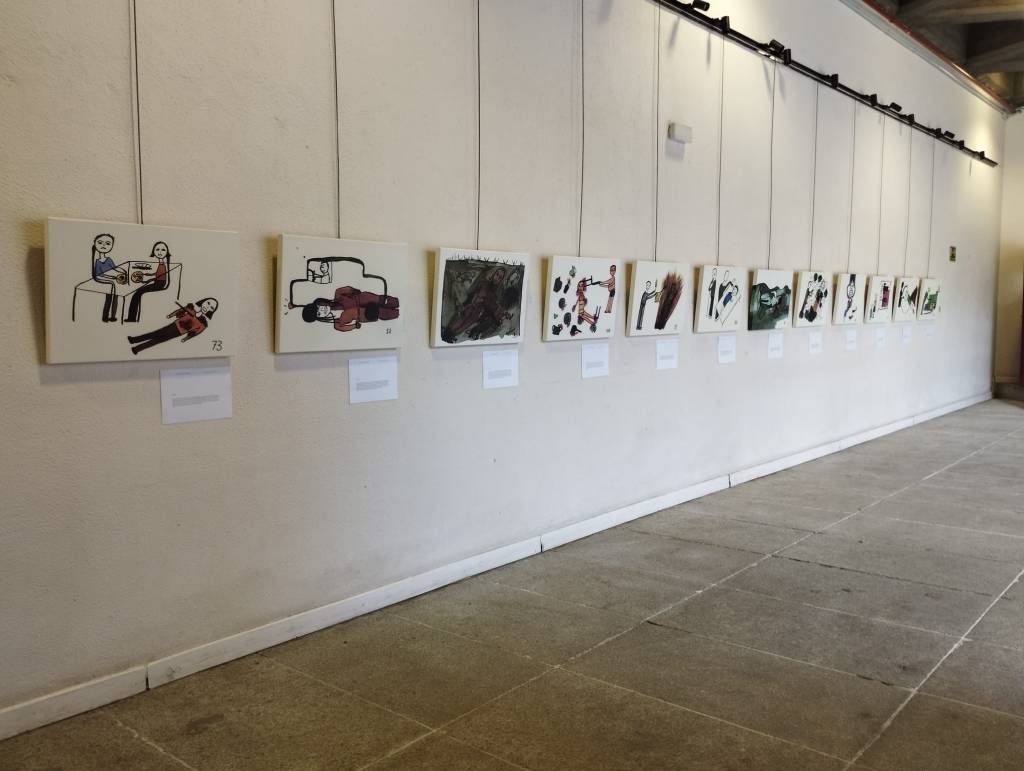
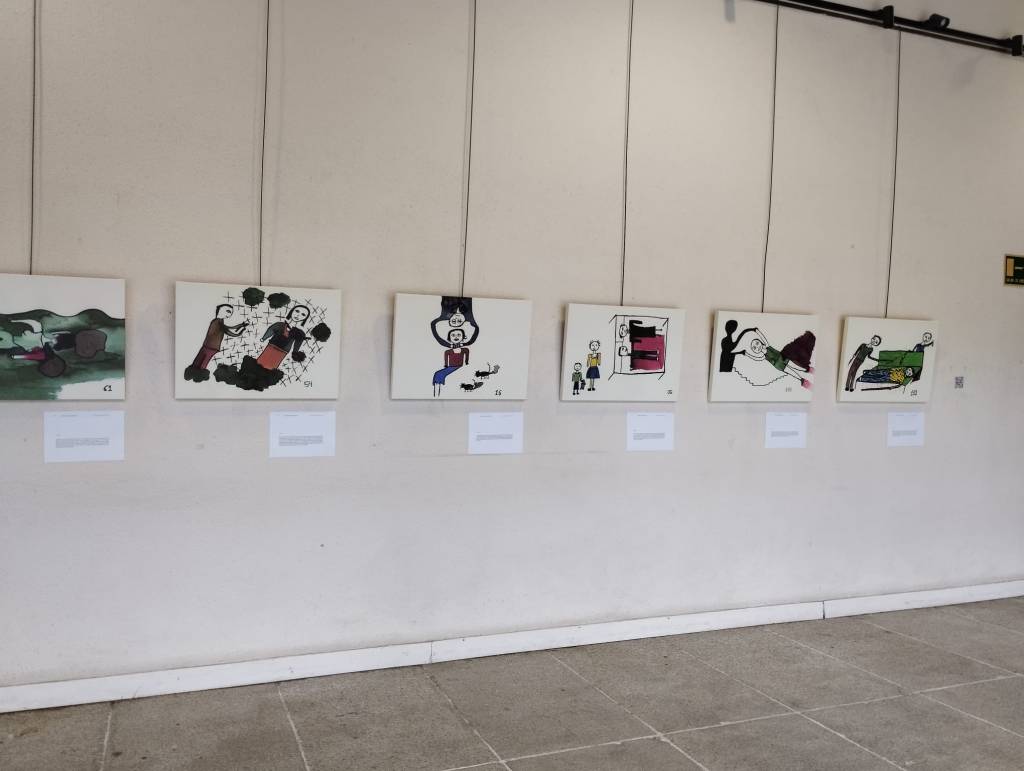
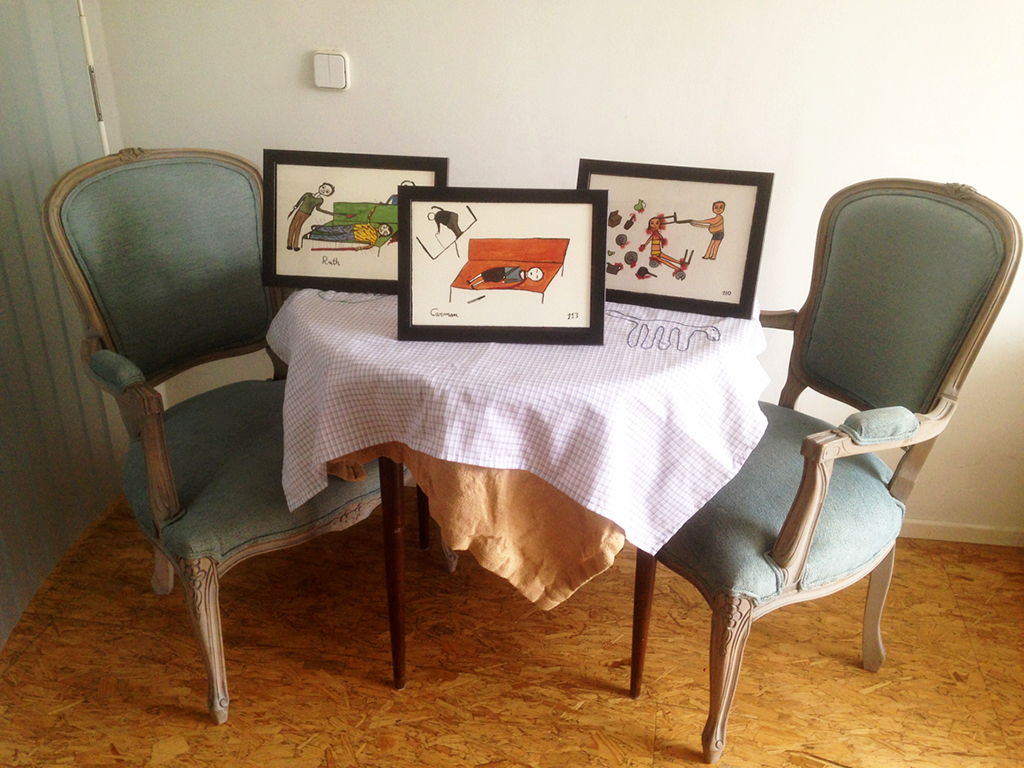
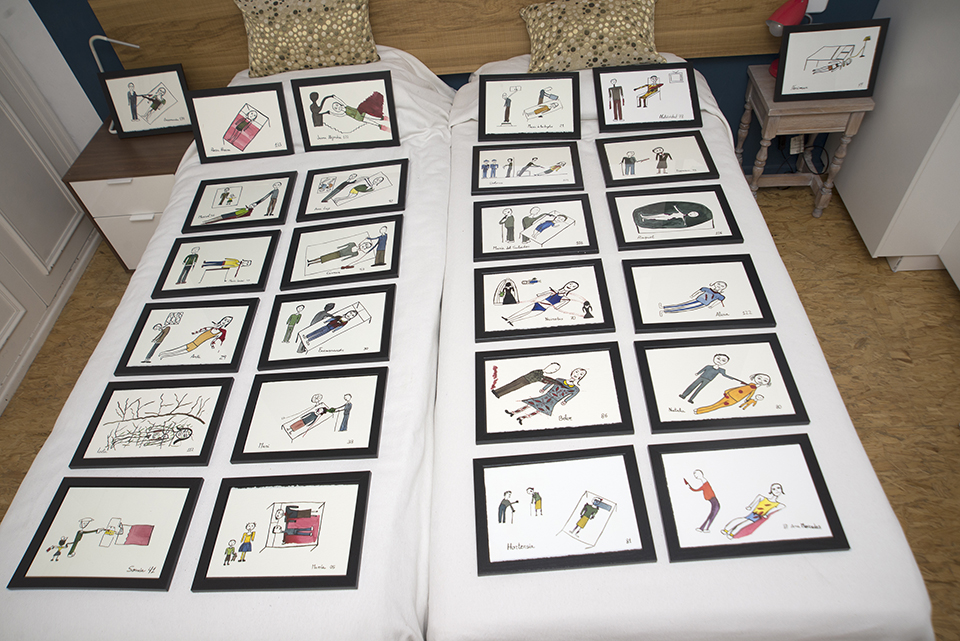
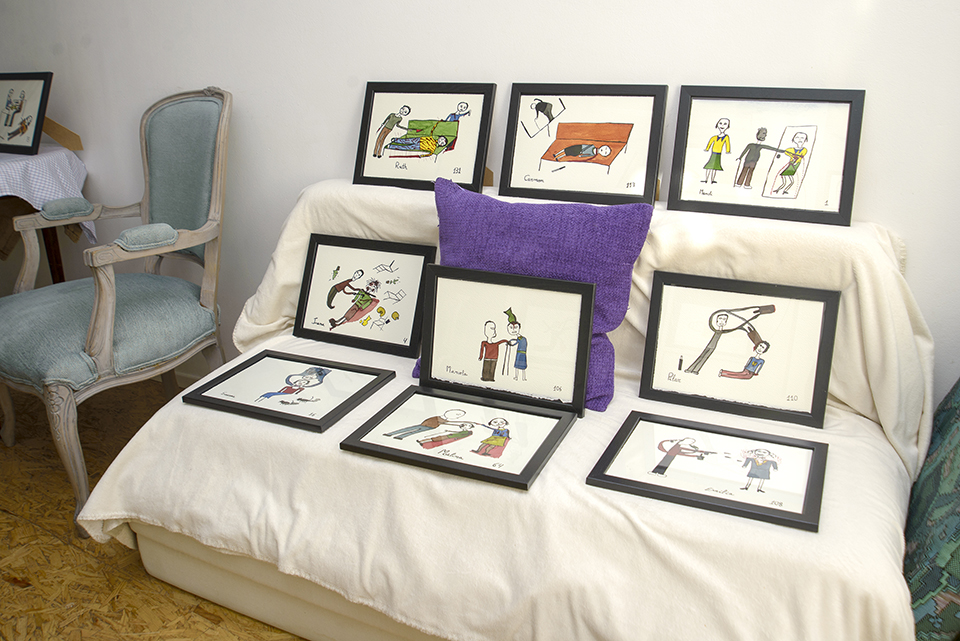
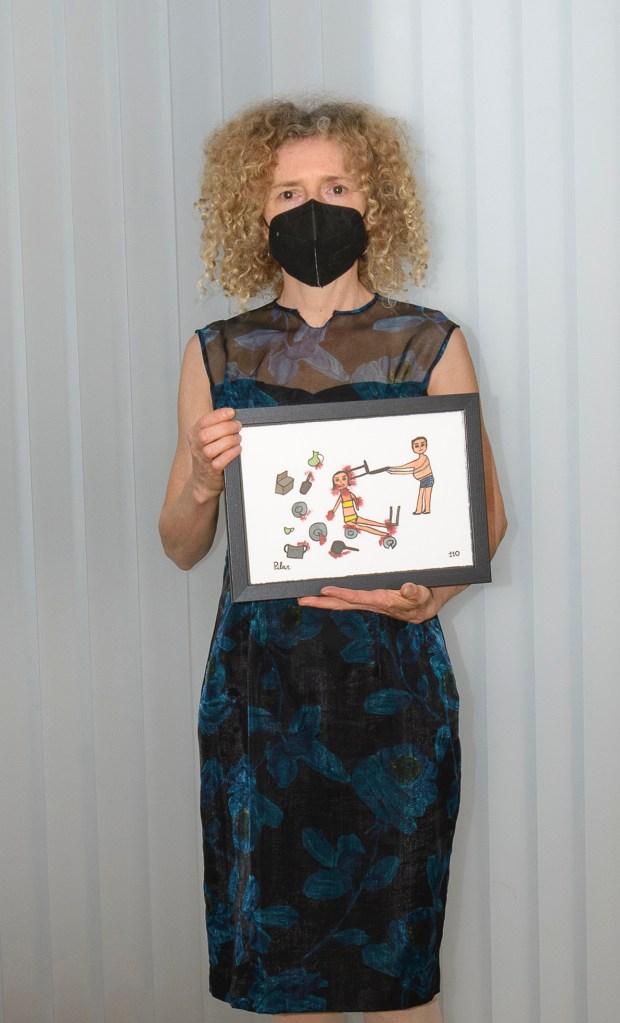
The illustrations are mementos, scenes of violence based on the stories of the killed women. The movement of my hand tried to follow the muscle memory of systemic abuse of women and resulted in expressive and naïve gestures. Also, I was looking for aesthetically pleasing drawings to compensate for the horror of the content, which resulted in the childlike style of the plates.
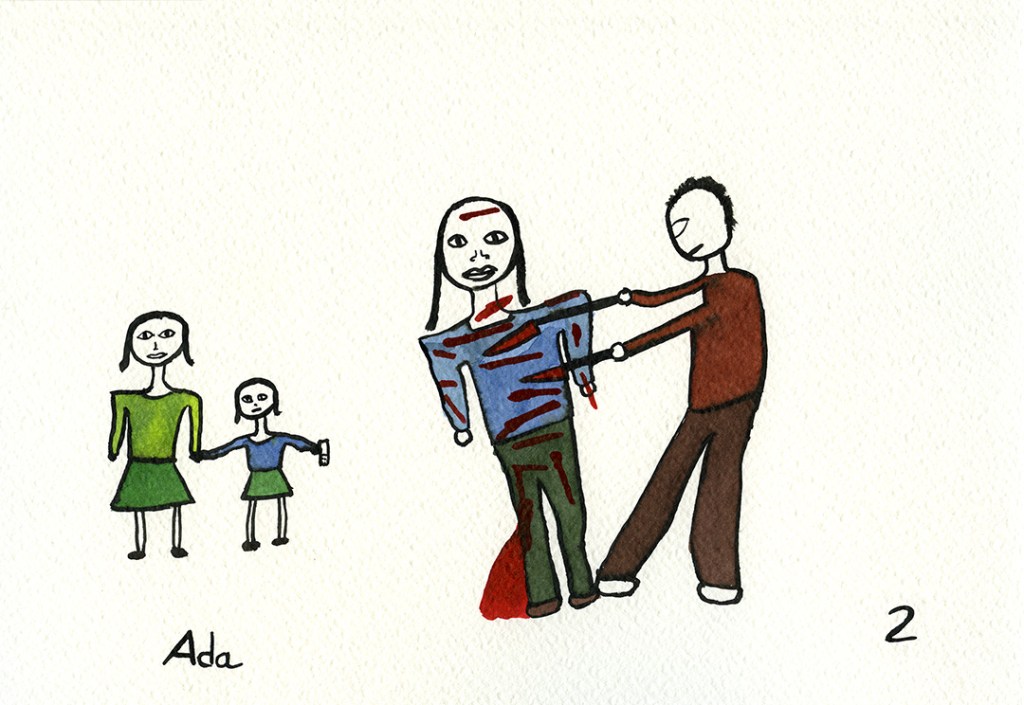
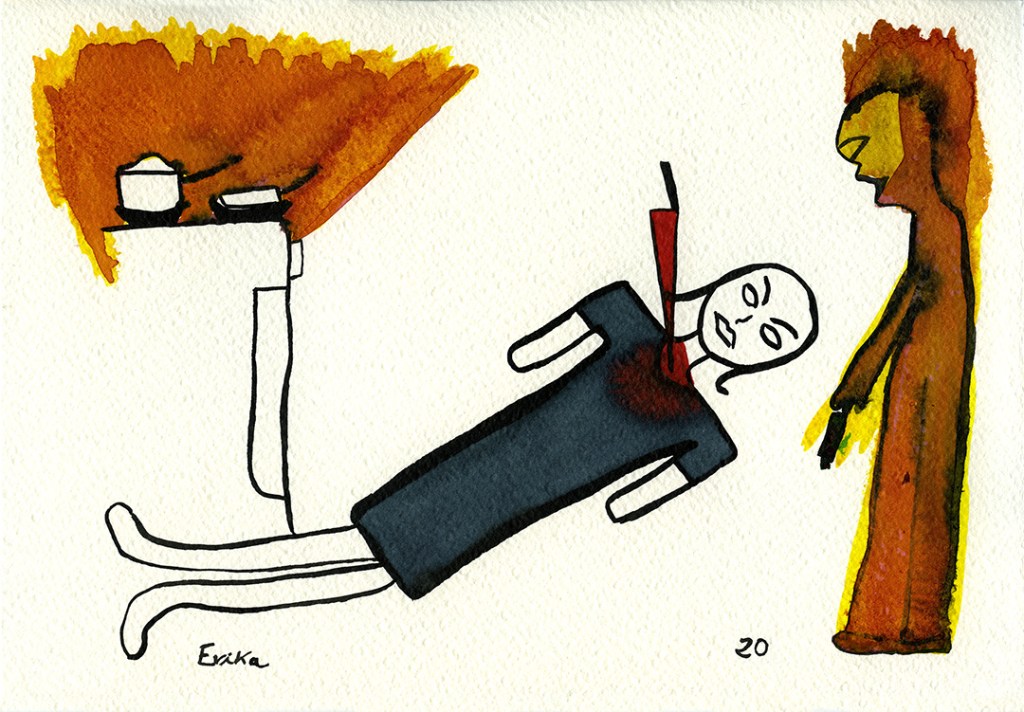
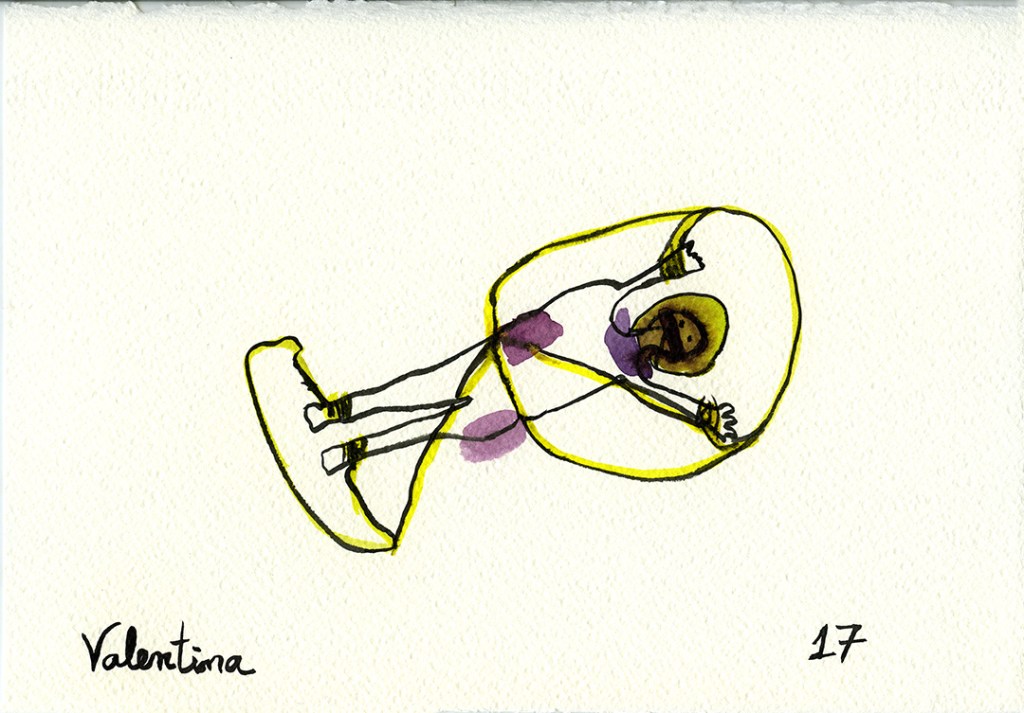
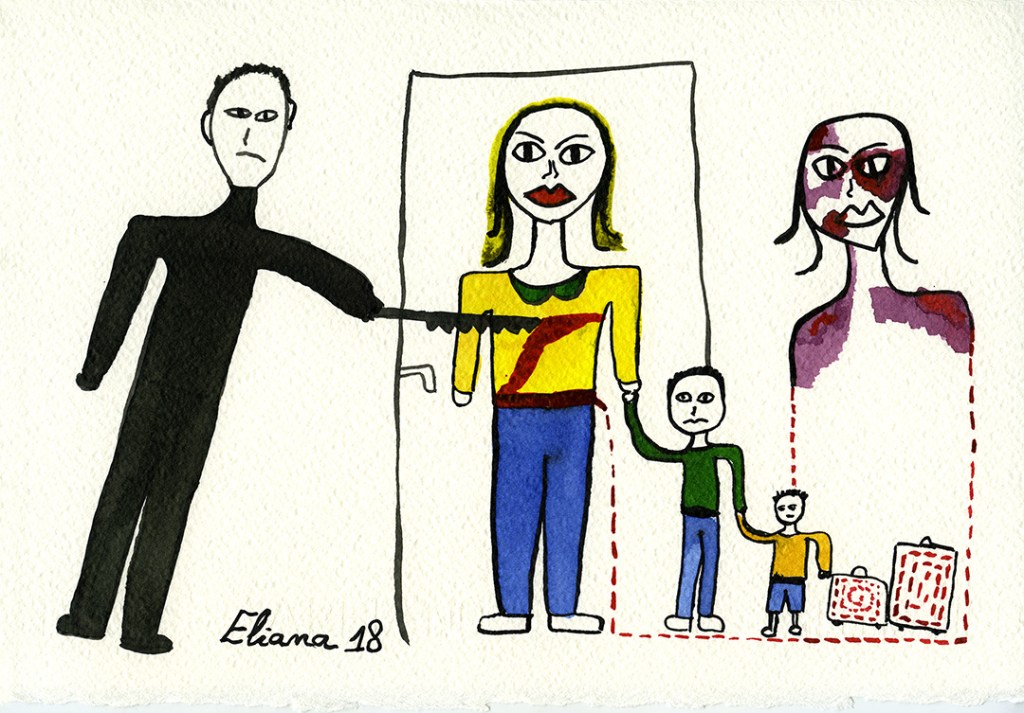
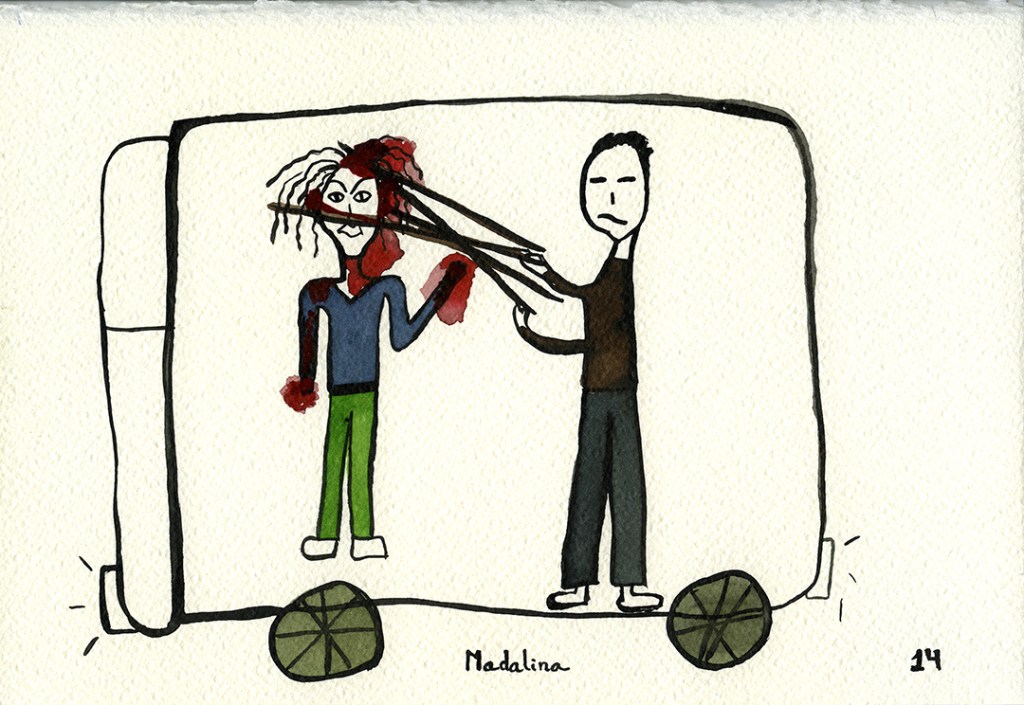
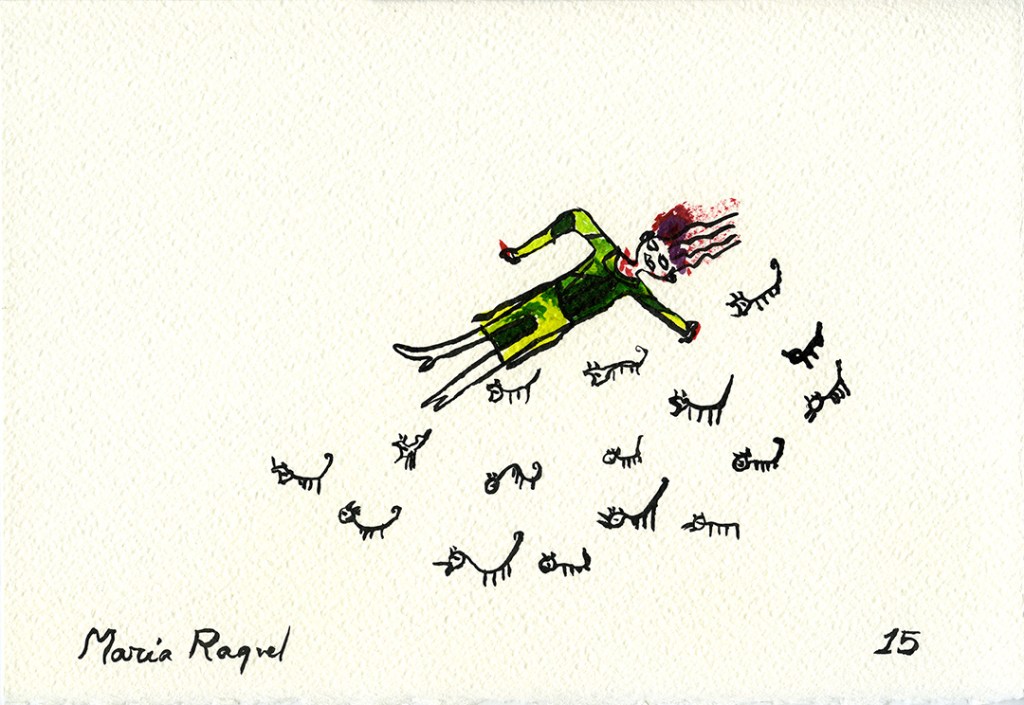
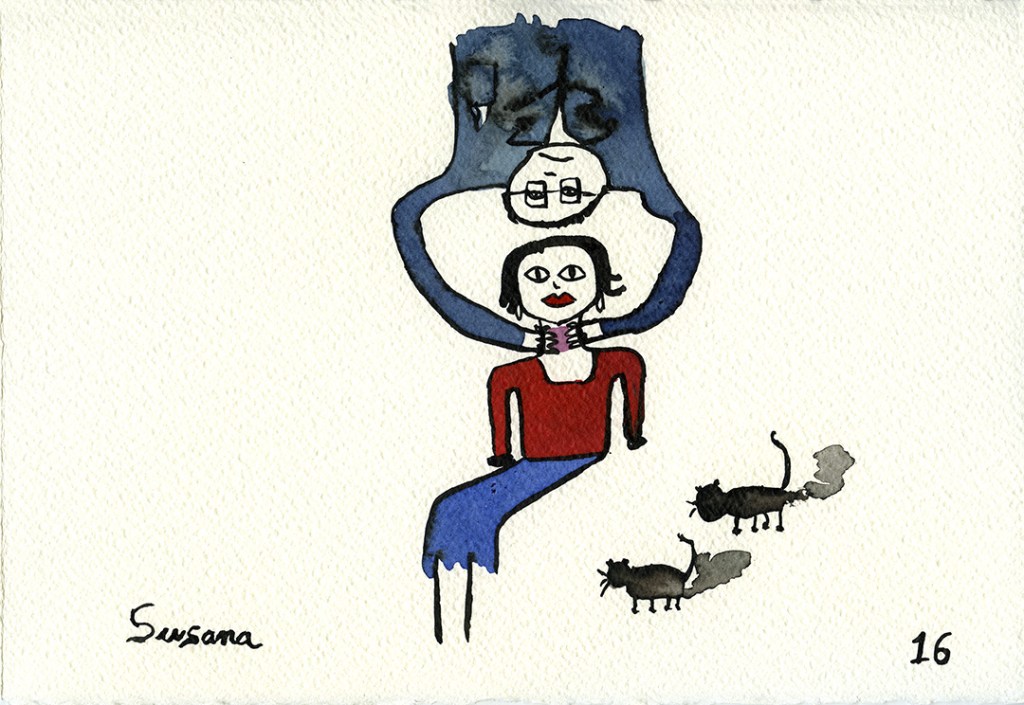
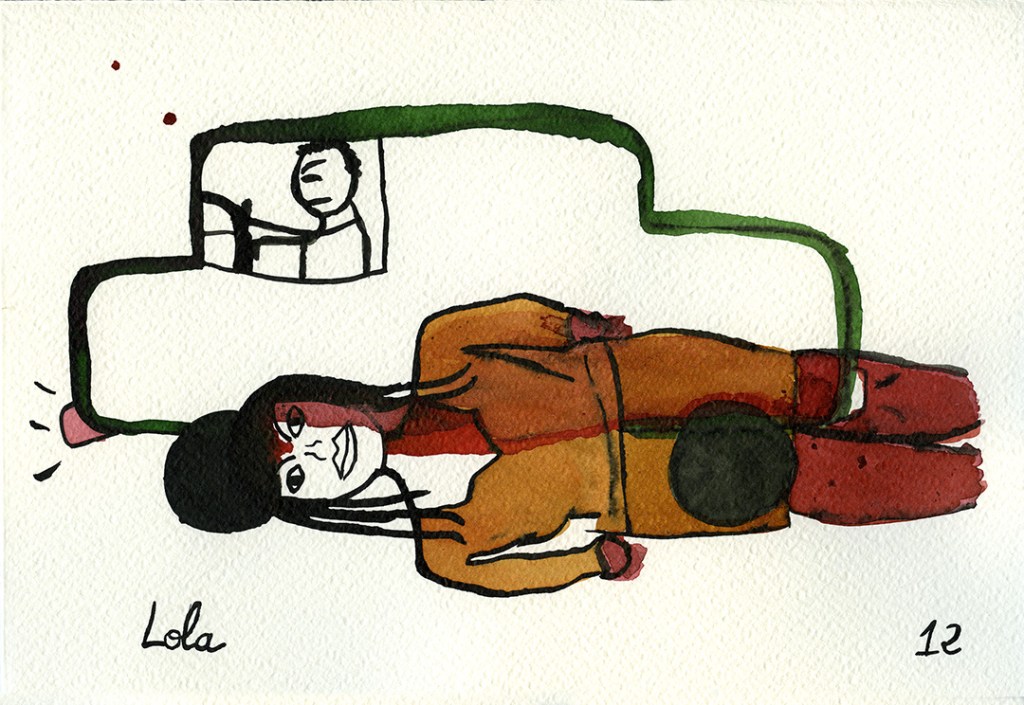
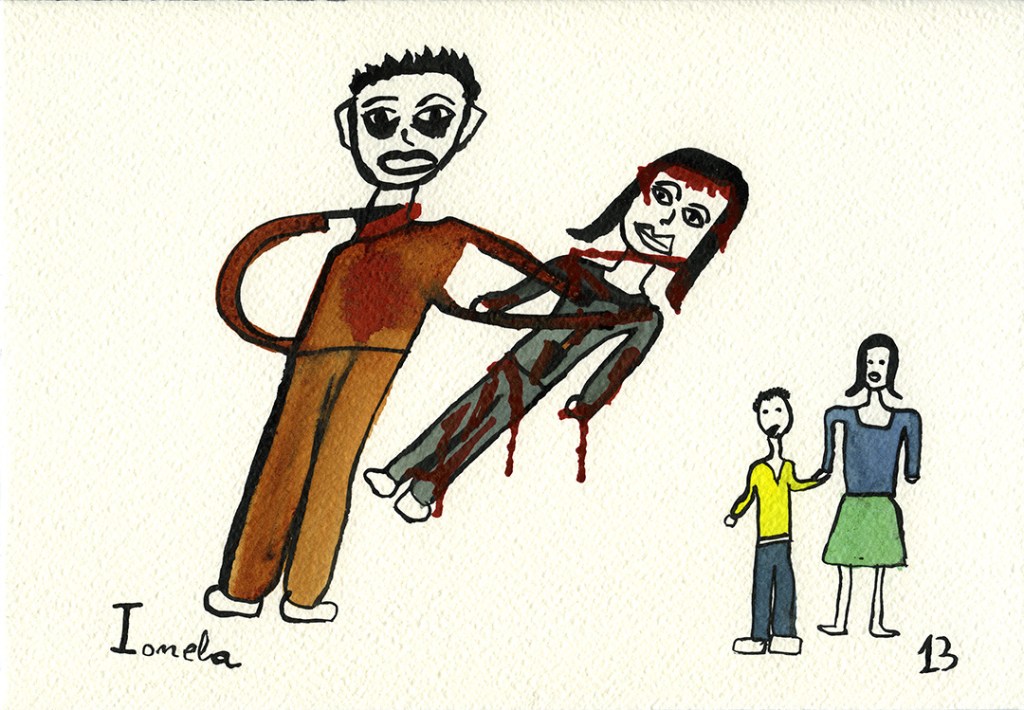
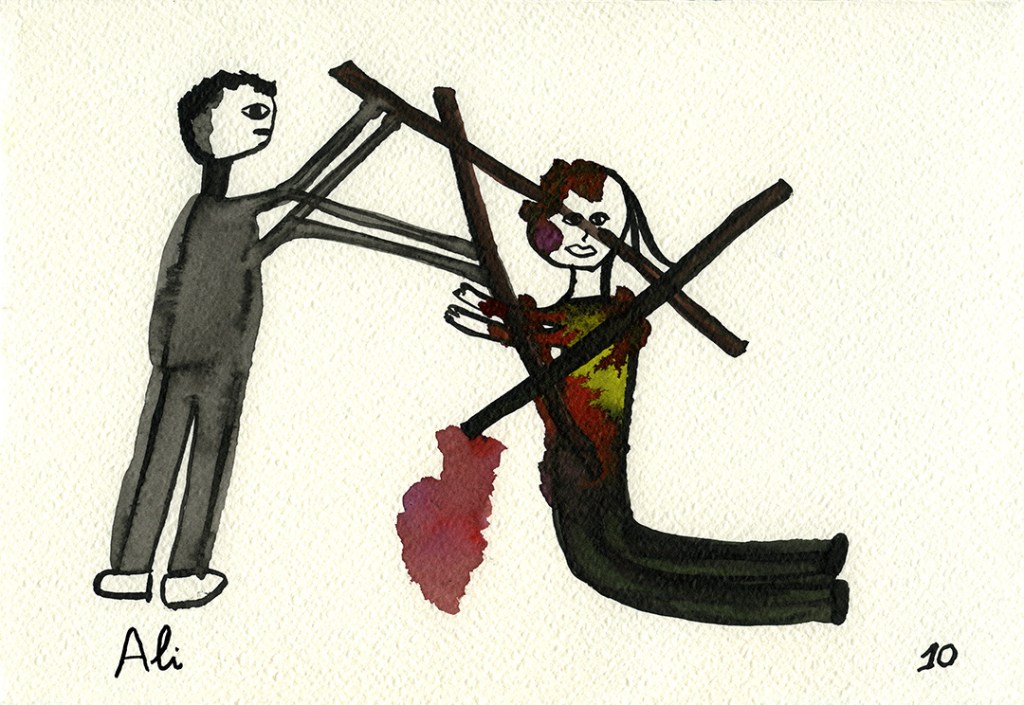
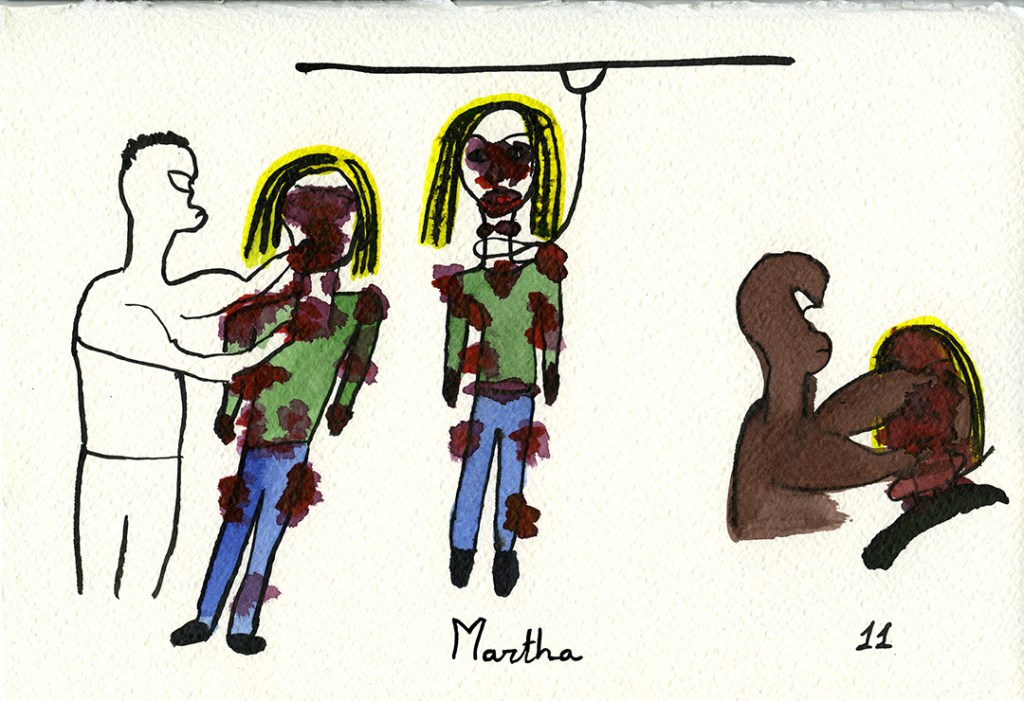
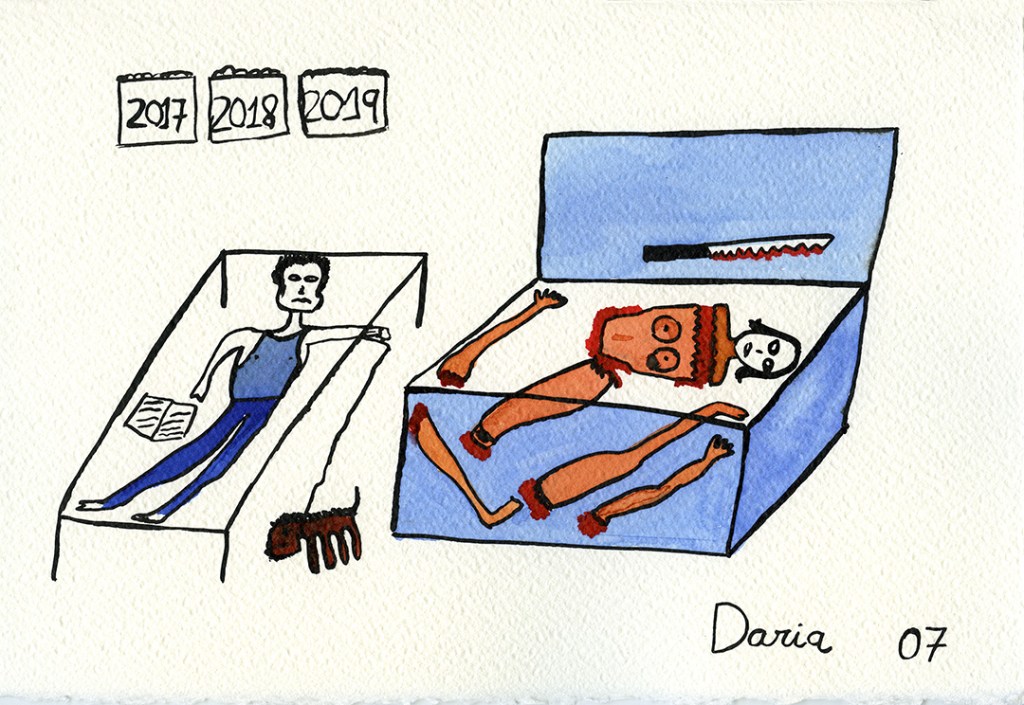
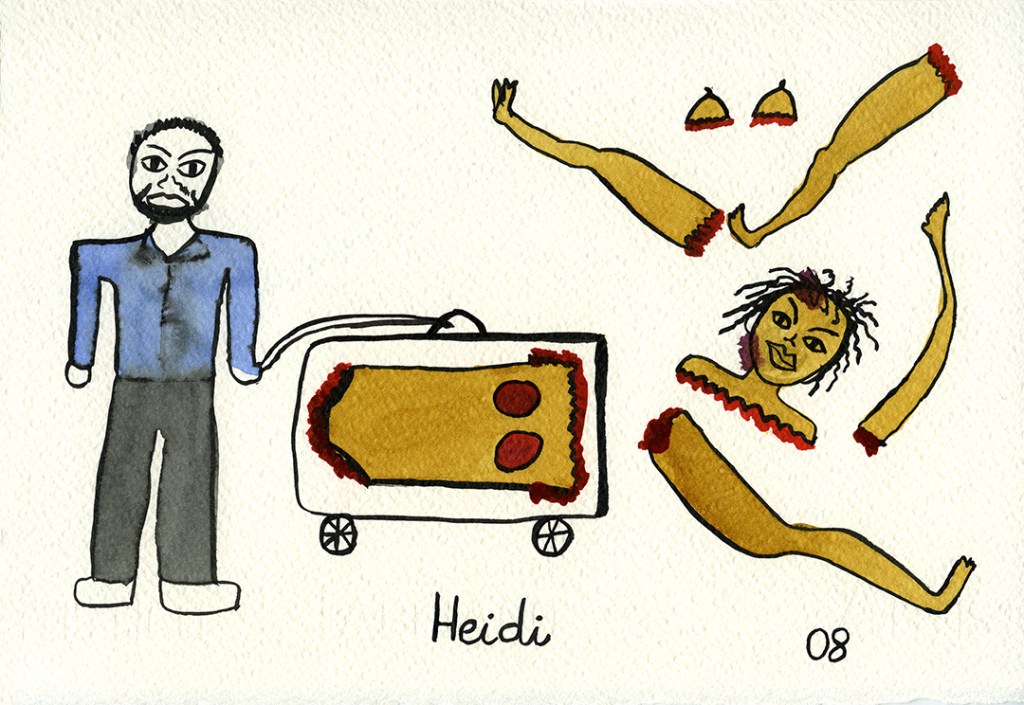
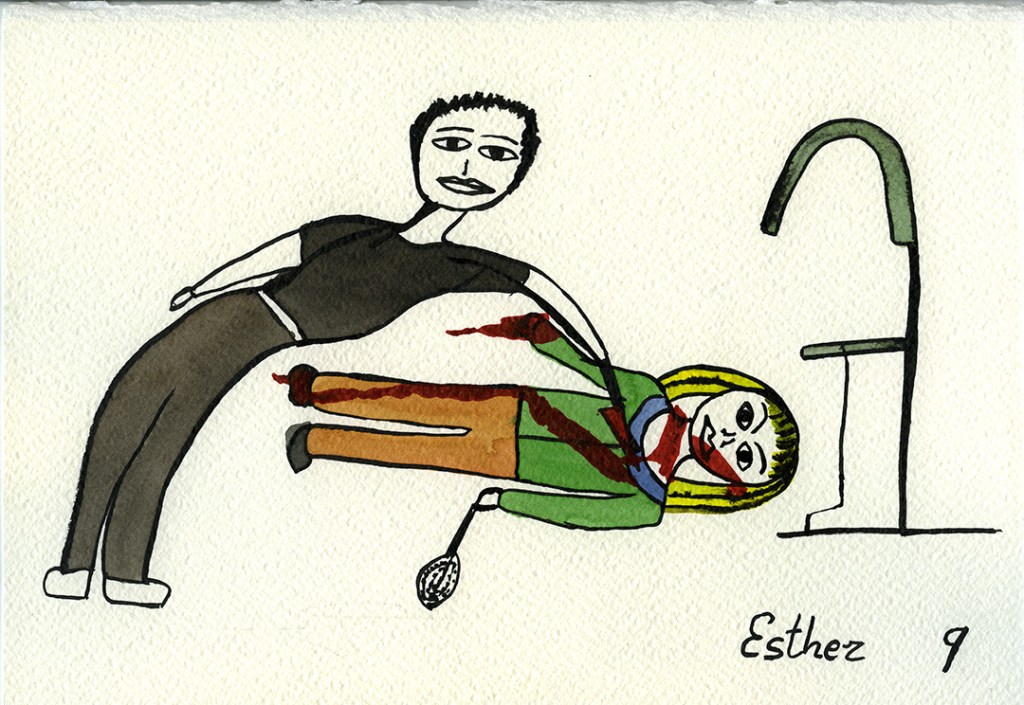
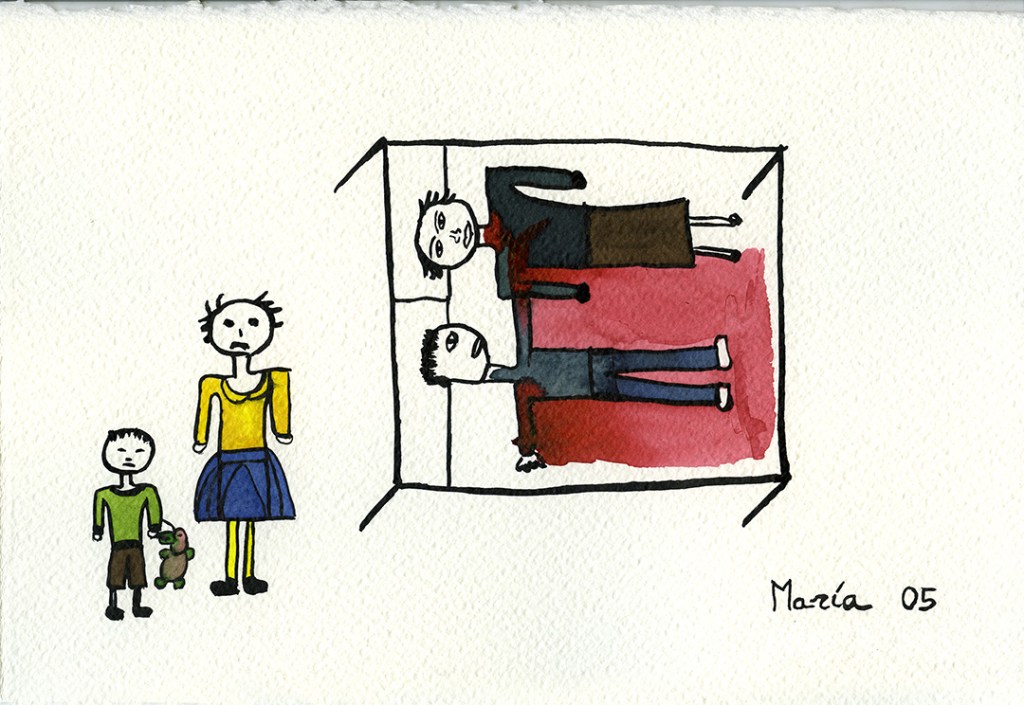
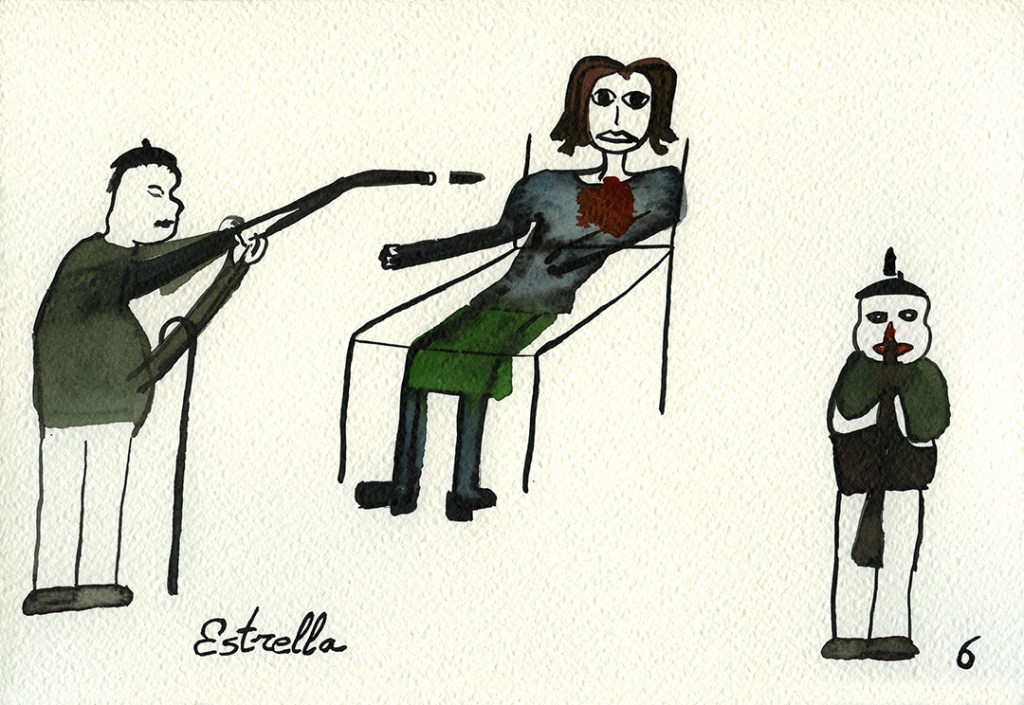
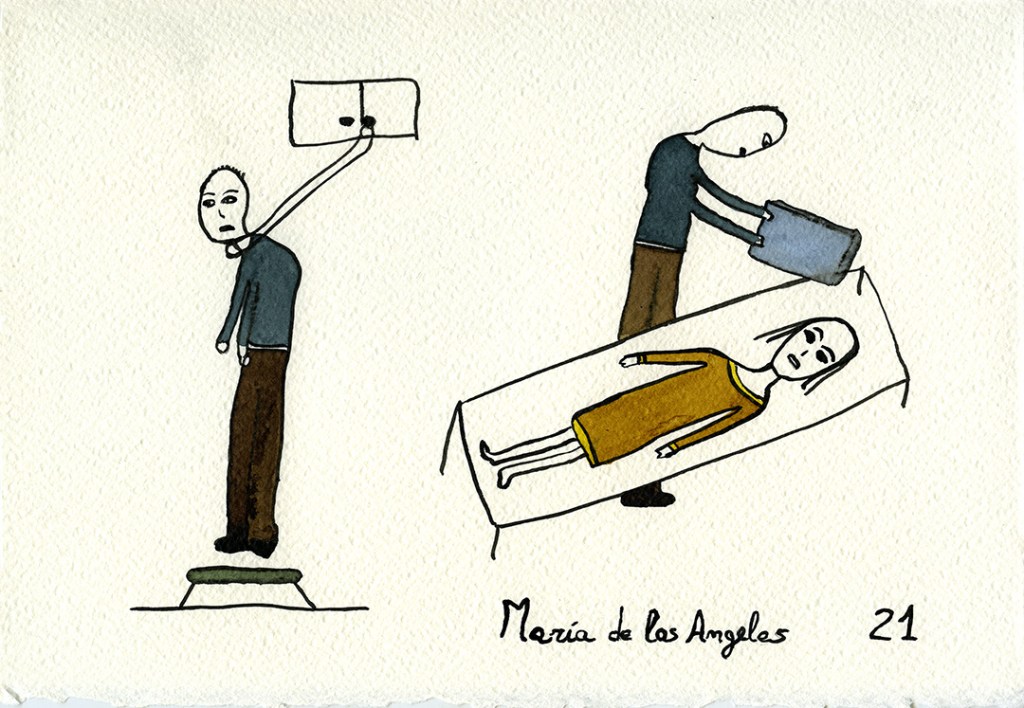
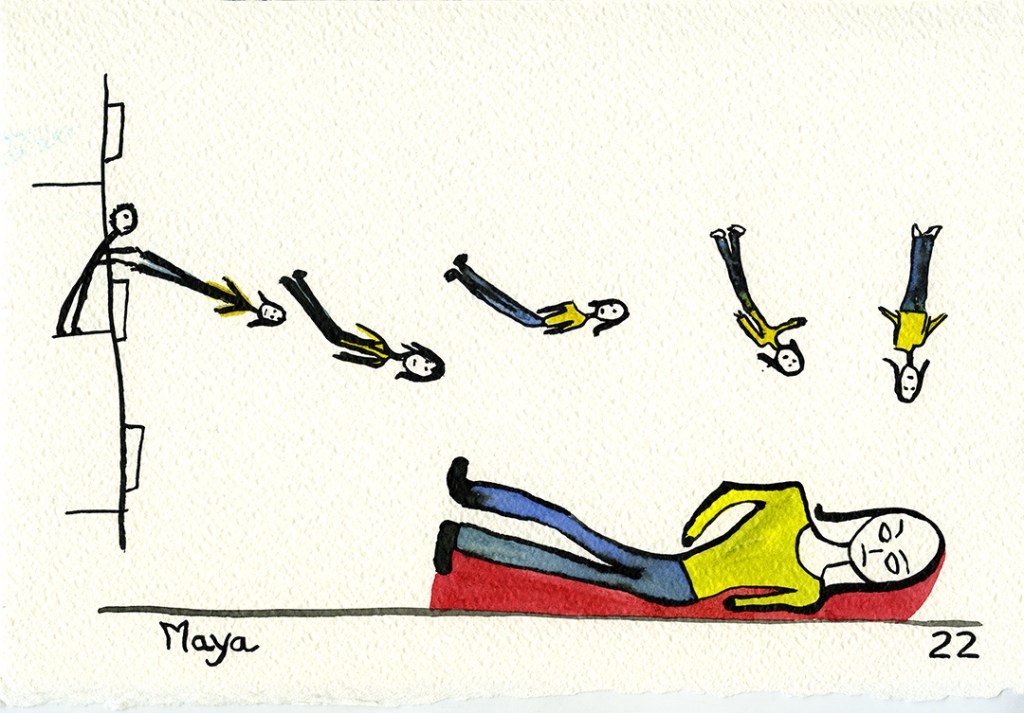
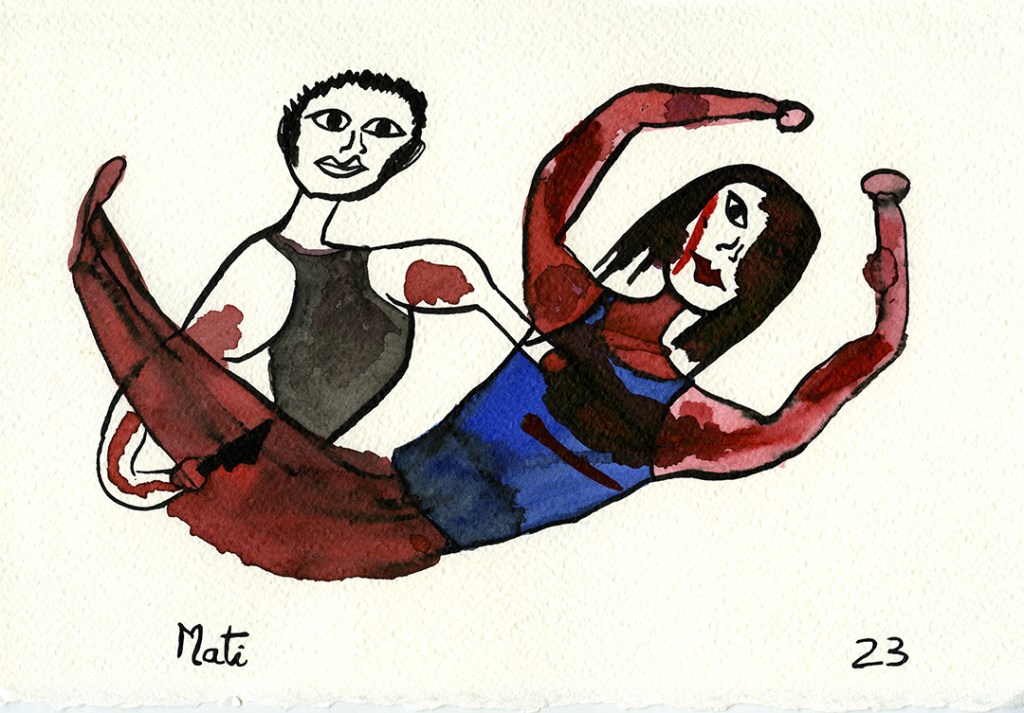
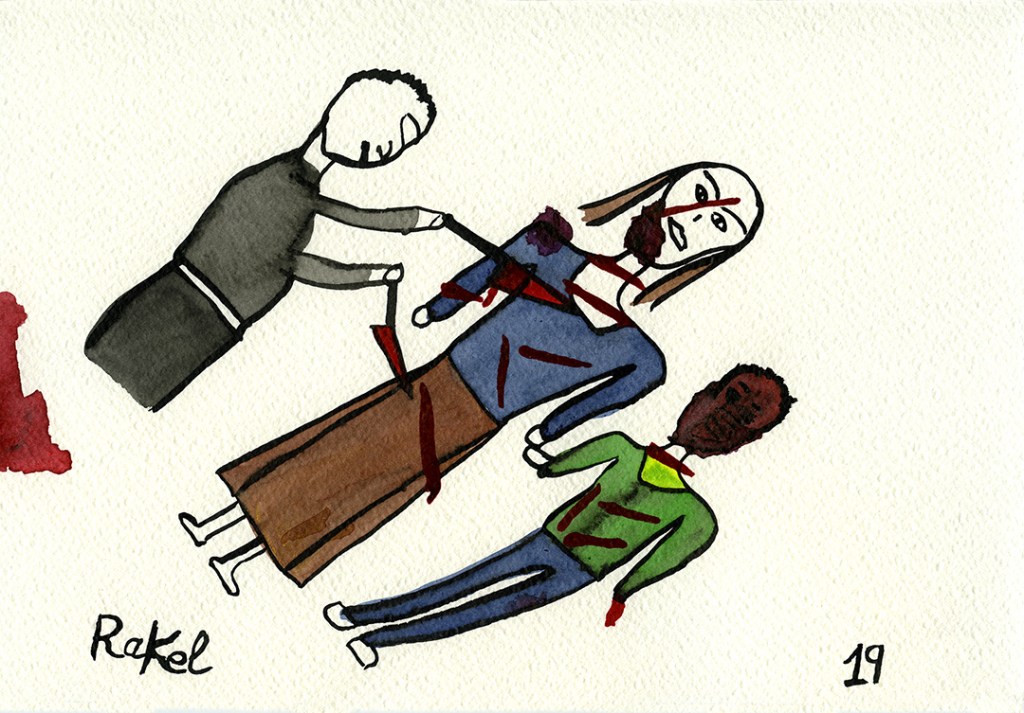
I began the research with a list of women murdered in Madrid that I had extracted from the list of murdered women in Spain, available from the Federation of Divorced and Separated Women of Madrid. After reading several cases with the list as a source, I considered the fields that were important to structure the database. Sergio Tombesi built the database, checked that the available data was correct, and investigated what was missing. This database is a table that contains the information of the whole project. In this database I dug into each woman’s history and wrote a description. As I read newspaper articles, I filled in the fields with the data I discovered. At first, each drawing was a simple sketch, a tool to construct the crime scene with the intention of taking a photograph later. But through the act of depicting each scene, the drawings became a way to visualize the information/emotion.
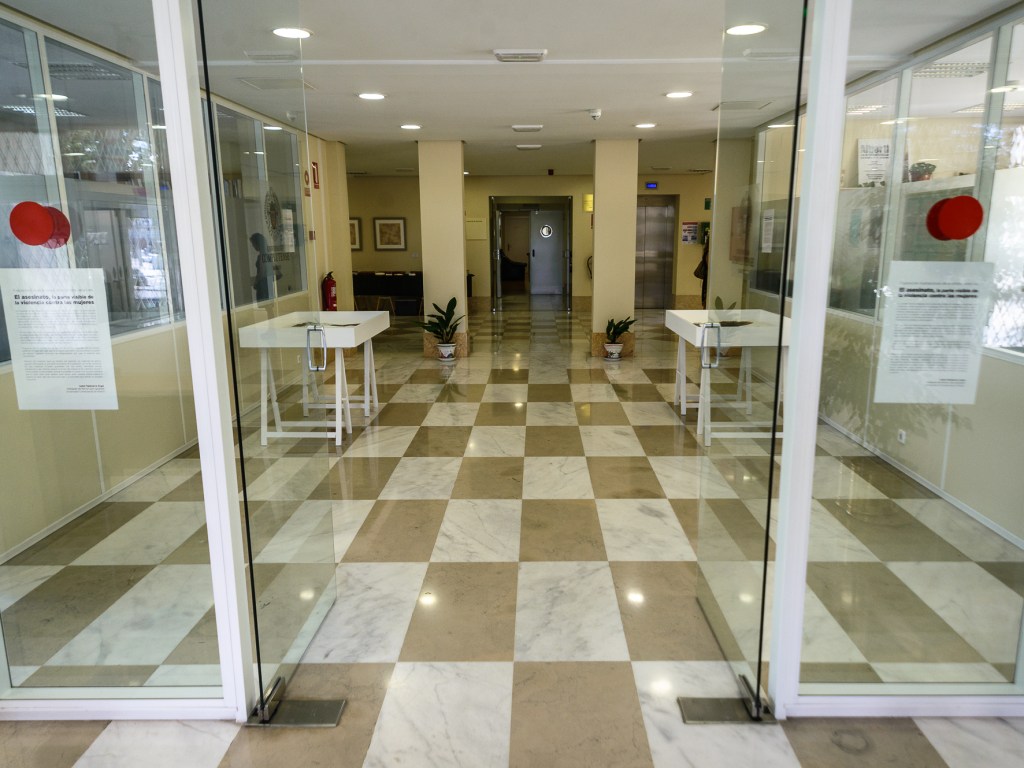
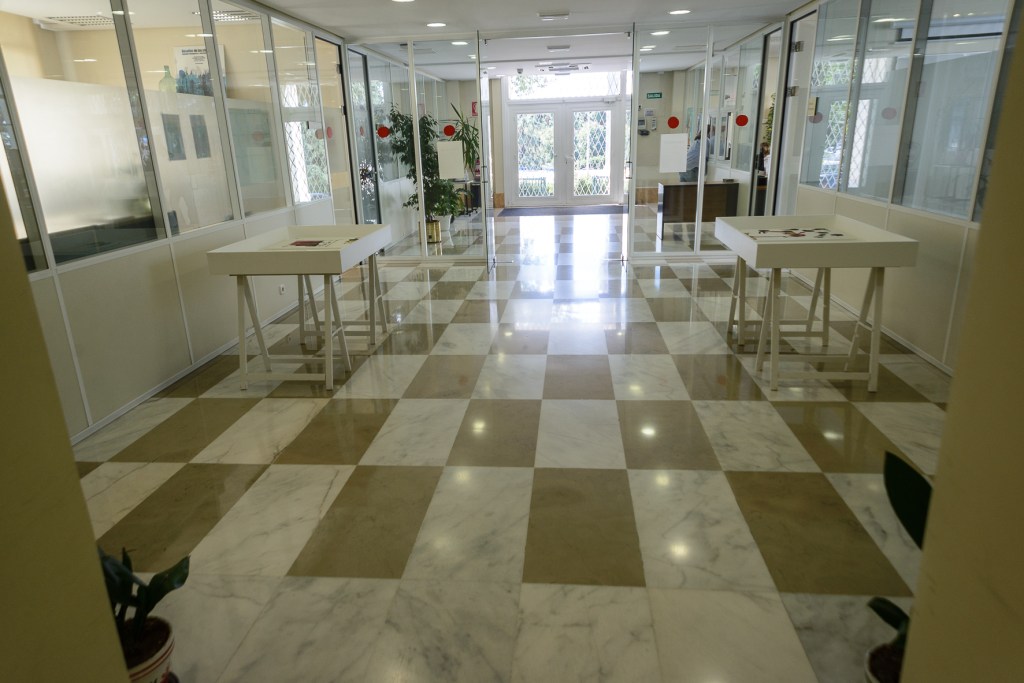
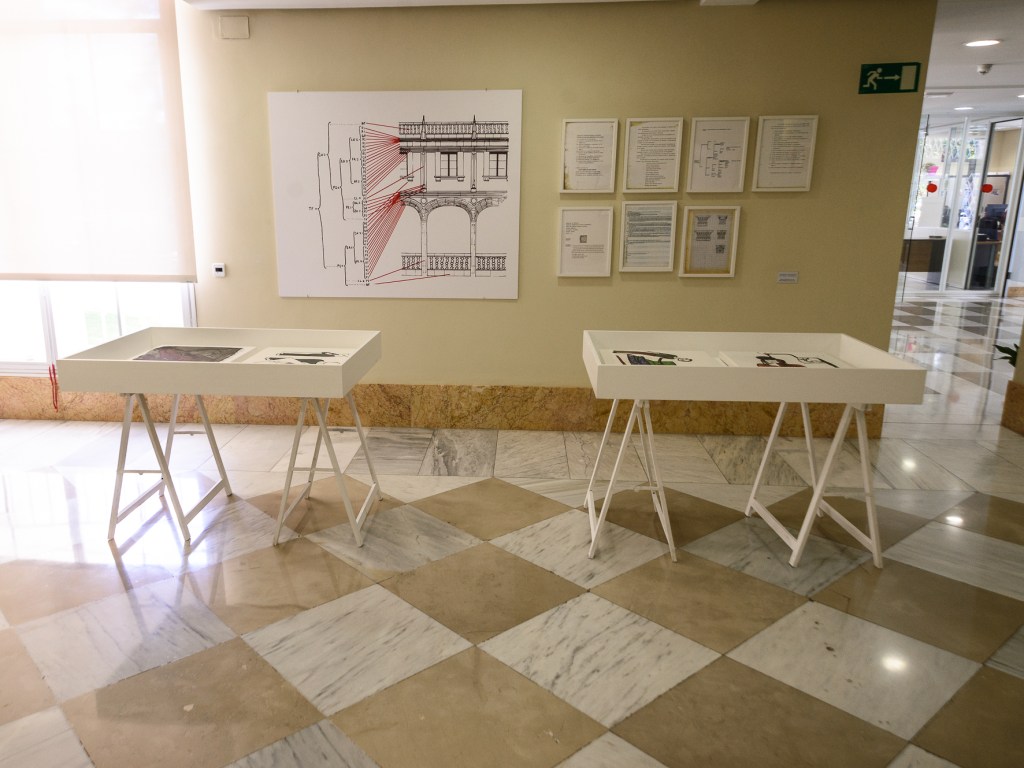
The second and public show takes place at Unidad de Igualdad UCM. La segunda exposición, esta vez en un espacio público ocurre en la Unidad de igualdad de la UCM, Octubre 6 2024.
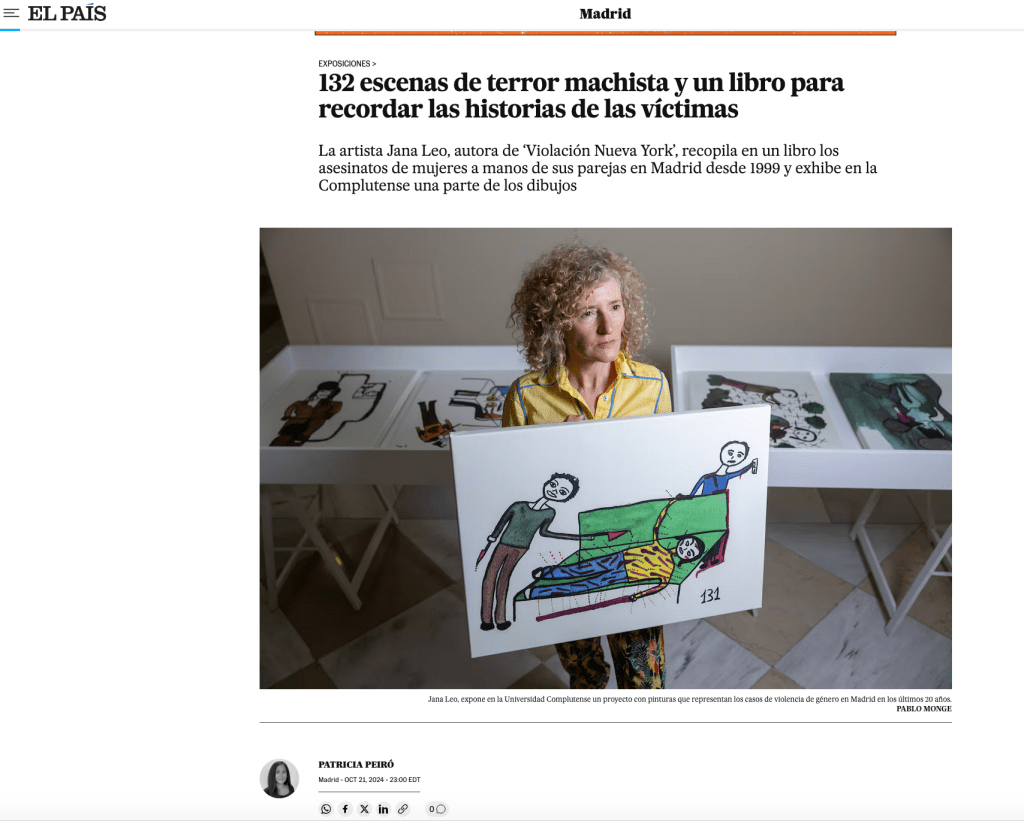
132 escenas de terror machista y un libro para recordar las historias de las víctimas
Patricia Peiró, Madrid – OCT 21, 2024
MOSIS relata las historias de 132 mujeres asesinadas por sus parejas hombres, convirtiendo los sucesos en literatura y arte. Cada relato abre un camino con el que conmoverse, identificarse y reaccionar. Al escenificar con un dibujo la muerte y contar en el texto la secuencia de hechos, insto a que la prevención se dirija a instruir a los agresores y no a las víctimas, a quienes se culpa por serlo. Muchas de las mujeres en este archivo han hecho todo lo posible para no ser víctimas de violencia de género e igualmente han sido asesinadas. Una mujer no debe llevar el peso de estar alerta para no ser víctima. Los relatos y los dibujos desvelan los signos del maltrato, la espiral de manipulación y el modus operandi del hombre violento. Exponer los patrones de agresión y mostrar, por contraste, lo que falta: respeto y apoyo, es la forma más simple de sensibilizar para que el potencial agresor no lo sea de hecho.
MOSIS tells the stories of 132 women murdered by their male partners, turning the events into literature and art. Each story opens a path with which to be moved, identify and react. By staging the death with a drawing and recounting the sequence of events in the text, I urge that prevention be directed at instructing the aggressors and not the victims, who are blamed for being the aggressors. Many of the women in this file have done everything possible not to be victims of gender-based violence and have still been killed. A woman should not have to carry the burden of being alert in order not to be a victim. The stories and drawings reveal the signs of abuse, the spiral of manipulation and the modus operandi of the violent man. Exposing the patterns of aggression and showing, by contrast, what is lacking: respect and support, is the simplest way to raise awareness so that the potential aggressor is not in fact an aggressor.
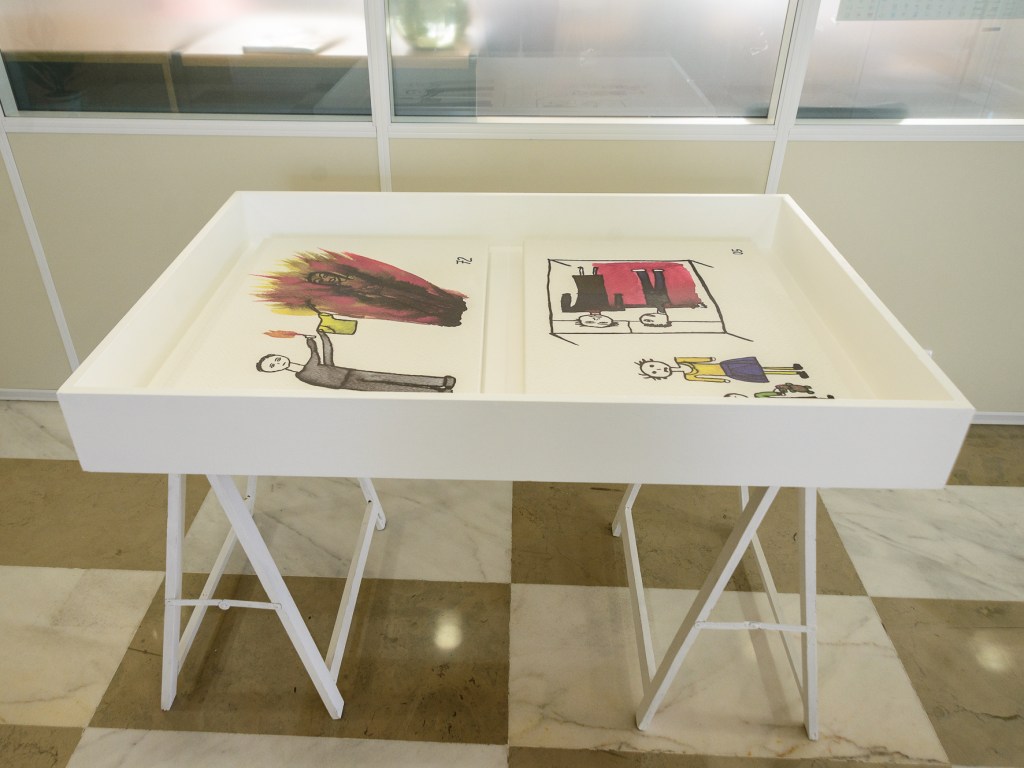
Exposición en la Unidad de Igualdad UCM 2024
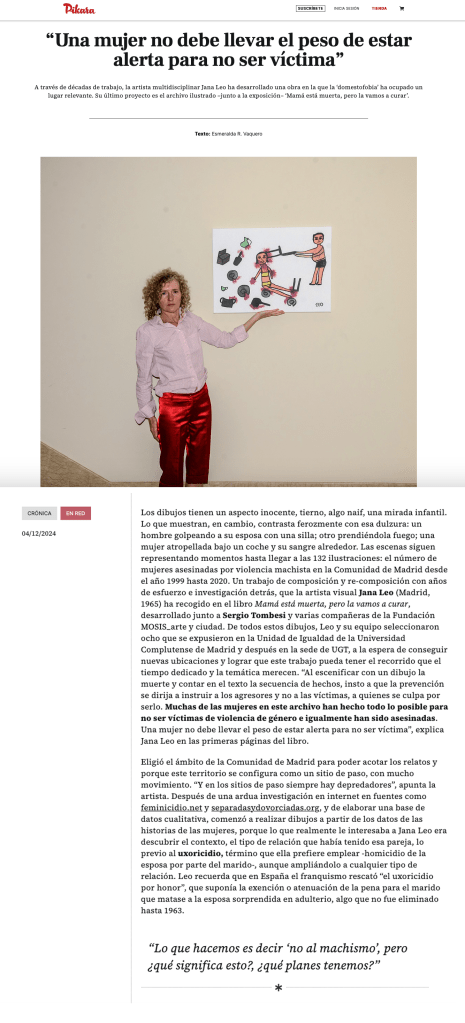
“Una mujer no debe llevar el peso de estar alerta para no ser víctima”
Pikara Magazine 04/12/2024, Esmeralda R. Vaquero
Jana Leo narra 132 historias de violencia de género en un libro-archivo
Sofía Villanueva Valdovino | Madrid – 22 noviembre, 2024
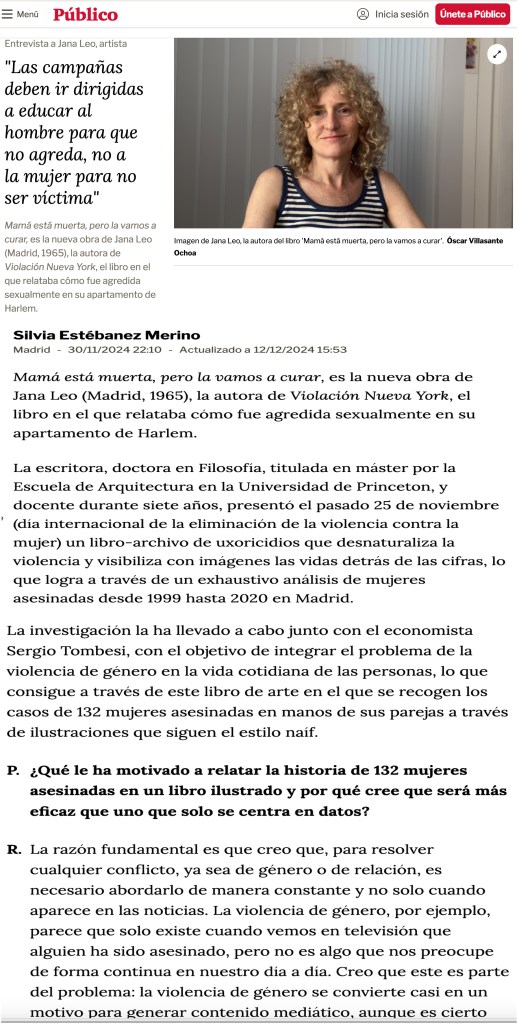
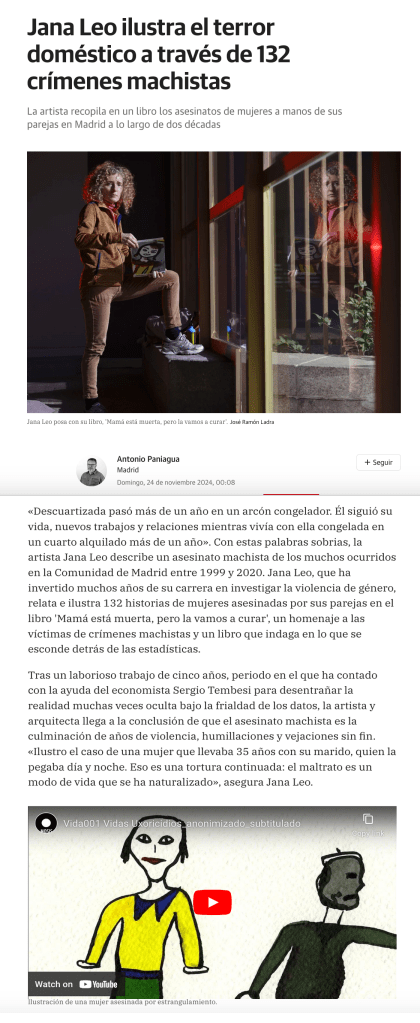
Jana Leo ilustra el terror doméstico a través de 132 crímenes machistas
Antonio Paniagua, Madrid, Domingo, 24 de noviembre 2024, 00:08
https://www.elnortedecastilla.es/sociedad/jana-leo-20241119191436-ntrc.html
https://www.ideal.es/sociedad/jana-leo-20241119191436-ntrc.html
https://www.burgosconecta.es/sociedad/jana-leo-20241119191436-ntrc.html
https://www.diariosur.es/sociedad/jana-leo-20241119191436-ntrc.html
https://www.lasprovincias.es/sociedad/jana-leo-20241119191436-ntrc.html
https://www.laverdad.es/sociedad/jana-leo-20241119191436-ntrc.html
https://www.elcorreo.com/sociedad/jana-leo-20241119191436-ntrc.html
https://www.diariovasco.com/sociedad/jana-leo-20241119191436-ntrc.html
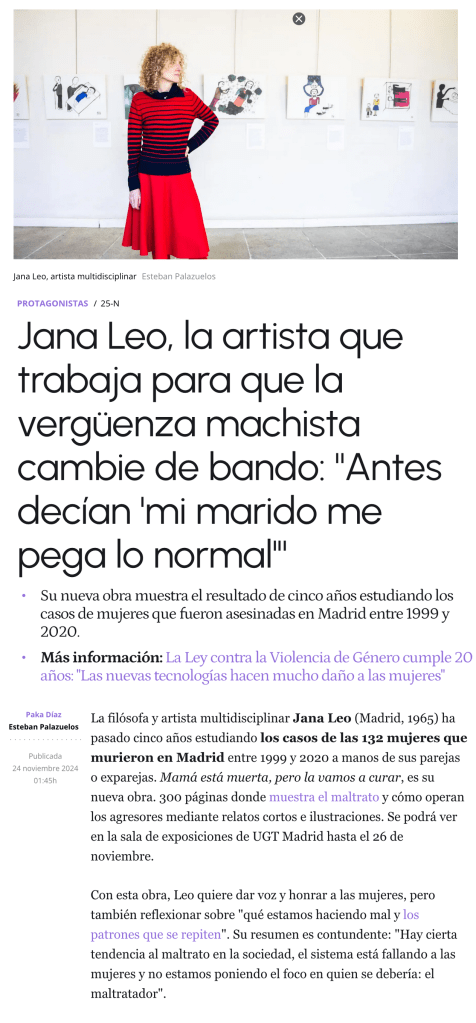
Jana Leo, la artista que trabaja para que la vergüenza machista cambie de bando: “Antes decían ‘mi marido me pega lo normal'” El español, Maga, protagonistas 25N Texto de Paka Díaz y fotografías de Esteban Palazuelos. 24 noviembre 2024.
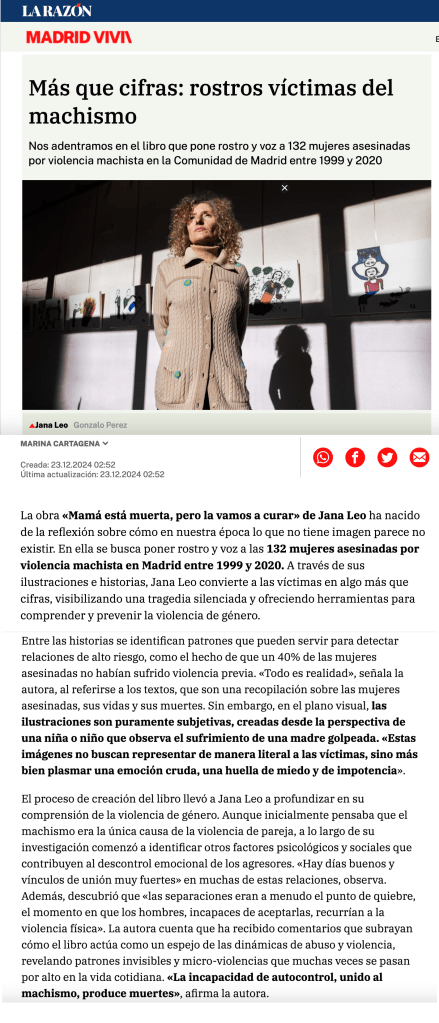
“Más que cifras: rostros víctimas del machismo”
La razón Marina Cartagena 23/12/2024
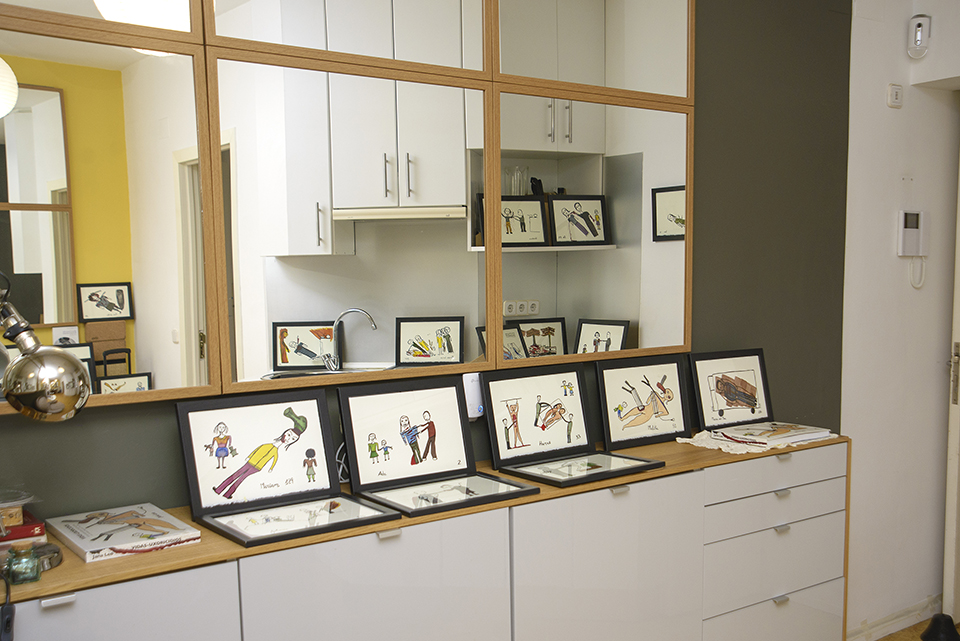
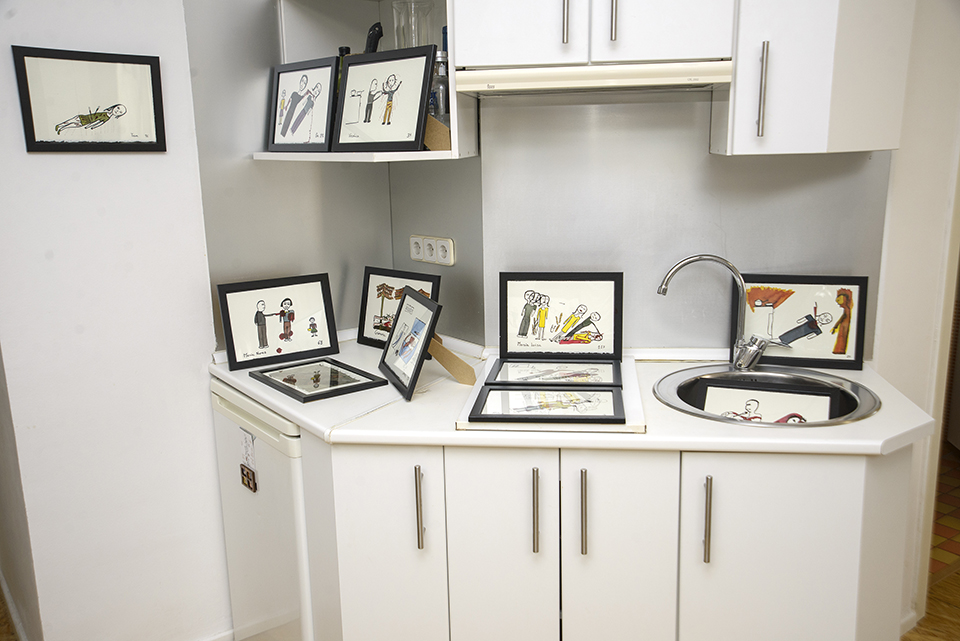
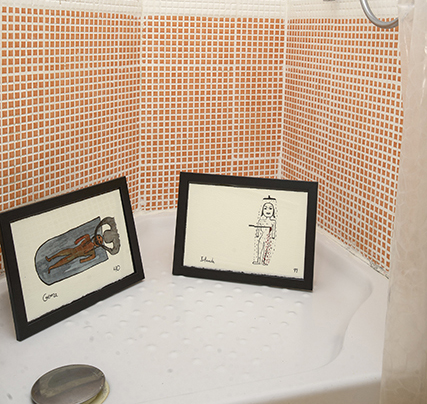
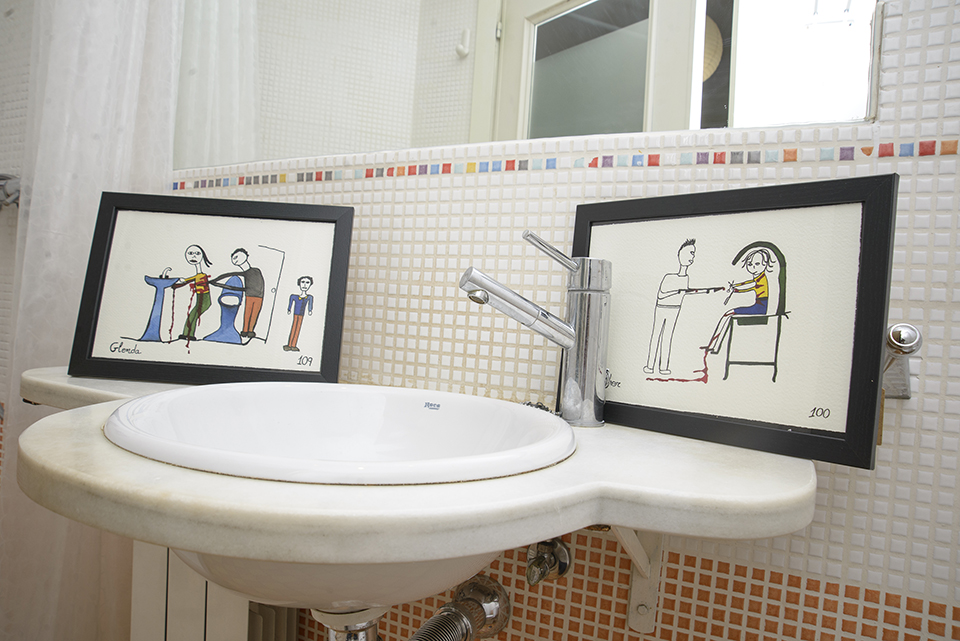
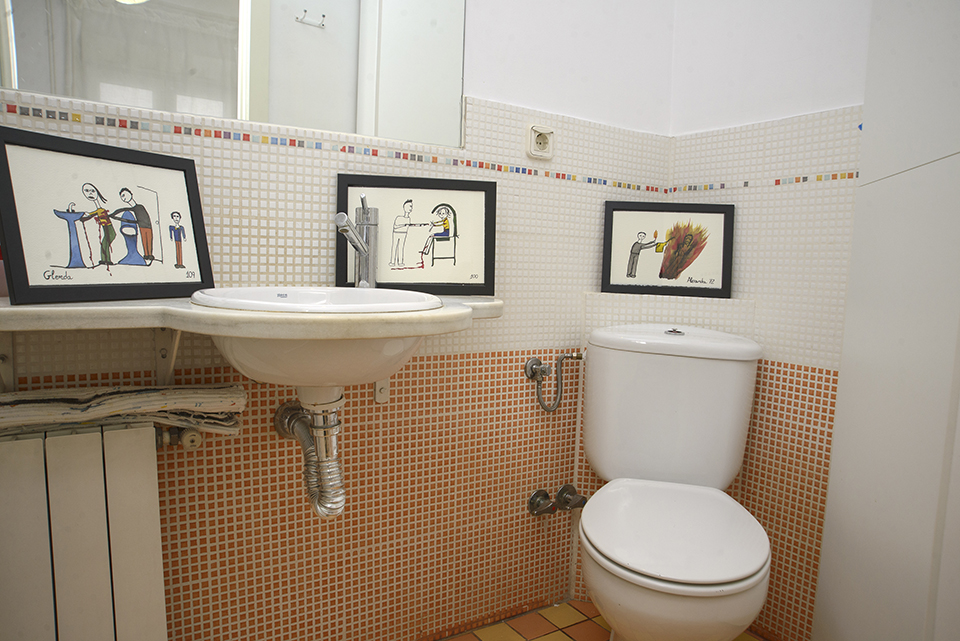
The first show took place in 2021, in a private apartment in Madrid. All the original drawings were shown along different rooms.
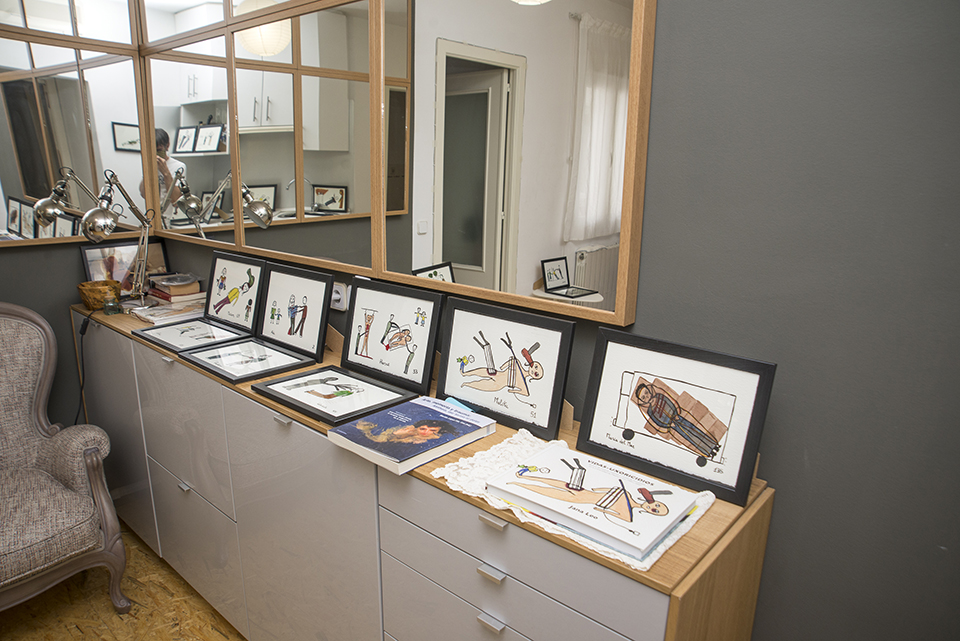
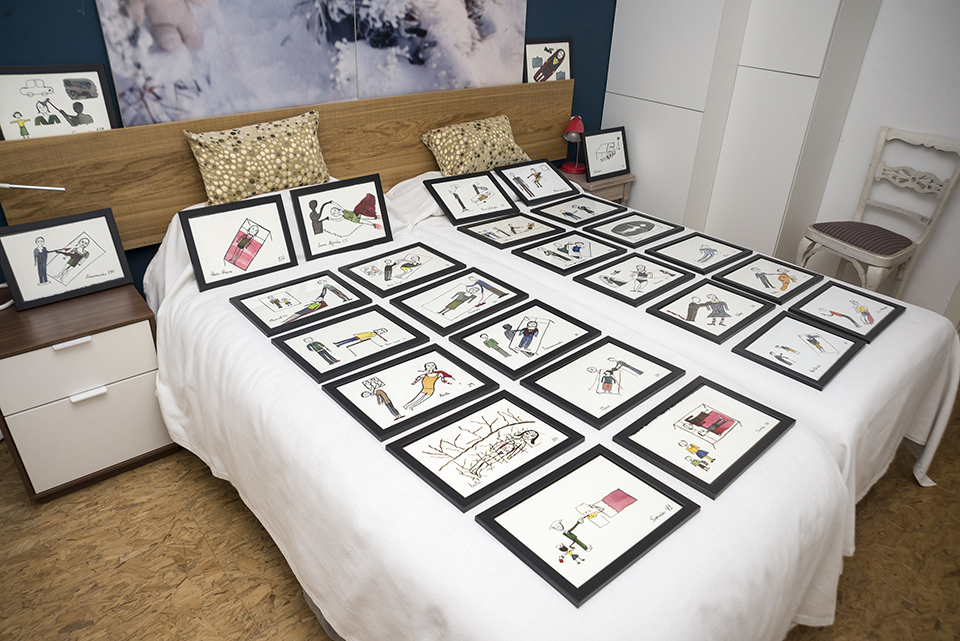
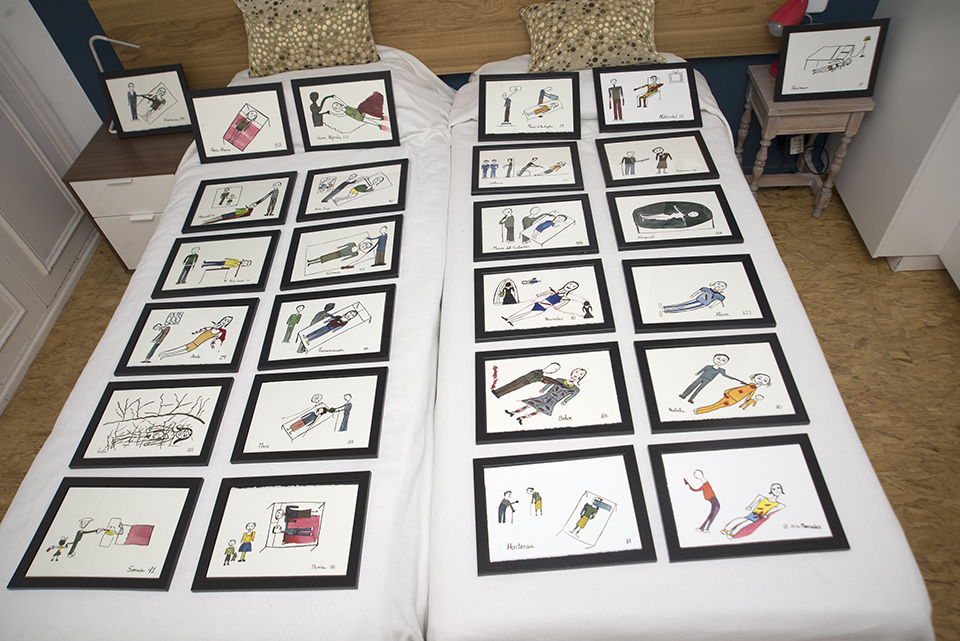
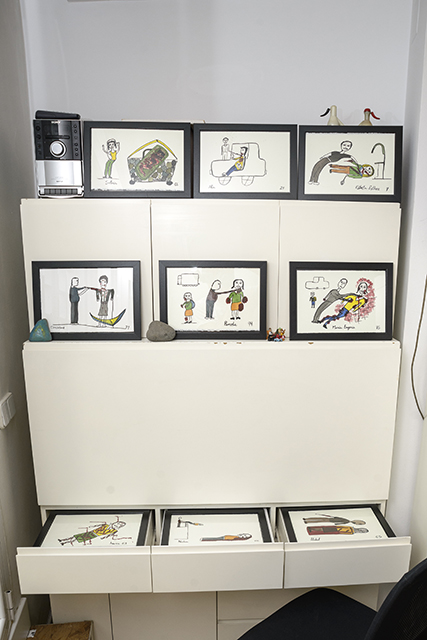
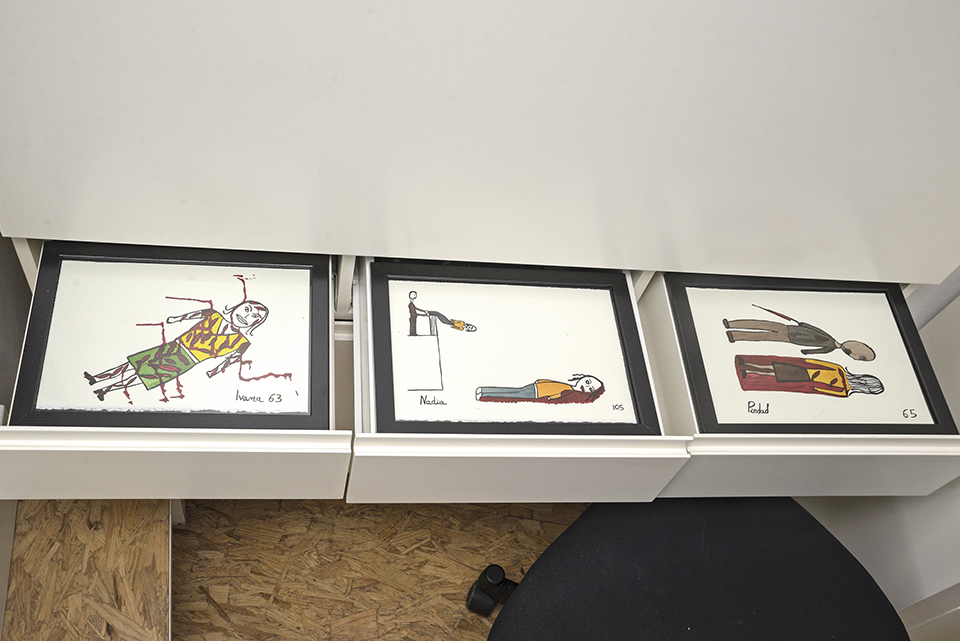
The journey is long and nonlinear. To make the sketch, I started from the victim’s profile taken from the victim’s data. The few initial fields of the table became more sophisticated through the drawing process and, in turn, changed the way I drew. Through the visual and material study, I recognized qualitative issues that were relevant, such as the trigger for the murder. So we inserted new fields into the table. The patterns I saw in the causes of death also influenced the drawing typologies, and I tried to show whether the death was the result of a one-time confrontation or the culmination of a process of constant abuse. On the second pass at the table, I filled in the gaps in each case and wrote a paragraph of five to seven lines that would later become the excerpt of each story. This work took me several months, and over those months, I redrew some of the illustrations

Producido por Fundación Mosis, Programa Vidas.
 Jana Leo